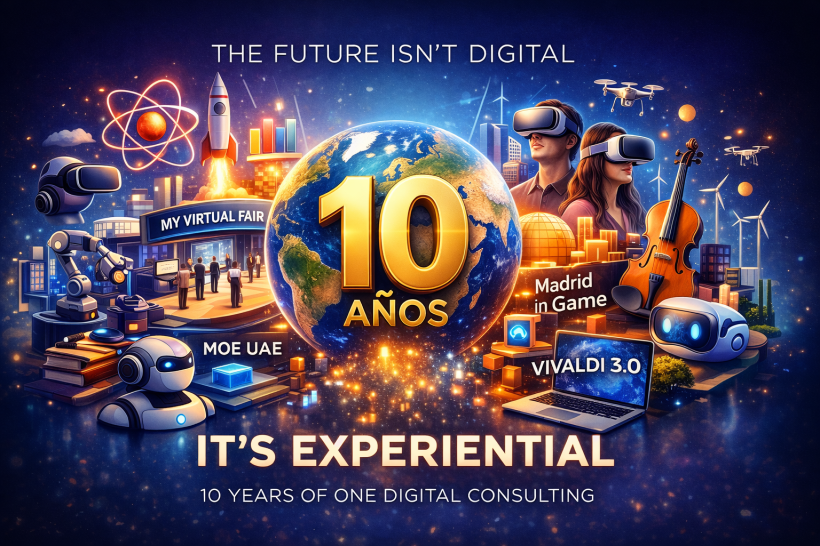
Reimagining Musical Experiences: The Story of Vivaldi 3.0 XR

Built on this foundation, “Vivaldi 3.0 VR” aims to offer a multisensory journey linking music with nature, sustainability, and the collaborative spirit of the next generation. Participants are invited not just to listen but to explore the profound relationship between “Vivaldi’s The Four Seasons” and the natural world, connecting music with emotion, storytelling, and an urgent call for environmental awareness.

The Story Behind the Seasons: Why Classical Music?

Built on this foundation, “Vivaldi 3.0 VR” aims to offer a multisensory journey linking music with nature, sustainability, and the collaborative spirit of the next generation. Participants are invited not just to listen but to explore the profound relationship between “Vivaldi’s The Four Seasons” and the natural world, connecting music with emotion, storytelling, and an urgent call for environmental awareness.

It may seem unusual to focus on classical music, yet through years of immersive experimentation, we’ve discovered that classical music epitomizes the very definition of universal sense. It transcends repetitive melodies and trivial lyrics, speaking directly to the soul as a universal language.

Classical music has the unique ability to inspire and transport us to spaces where nature, mind, and music coexist harmoniously—no prior knowledge of the composition or composer is required. It weaves stories rich in life, emotion, and feeling.

Did you know that Vivaldi’s The Four Seasons is one of the most listened-to pieces in the history of music worldwide?

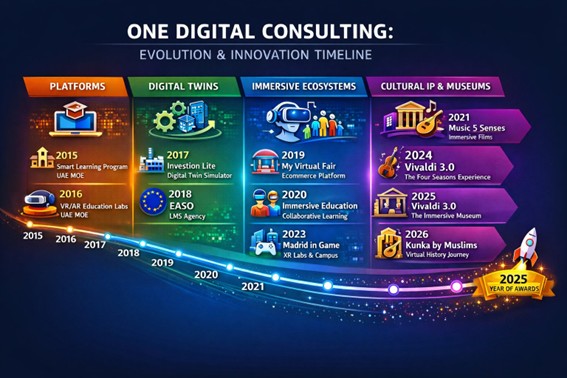
With Vivaldi 3.0 VR, we took a leap into uncharted territory—reimagining the timeless beauty of Vivaldi’s music by merging it with cutting-edge virtual reality technology. This journey began four years ago during the pandemic, in collaboration with the Reina Sofia High School of Music. Together, we ventured into immersive storytelling, Music with Five Senses using the works of composers such as Tchaikovsky, Mozart, and Respighi as a foundation.

We produced 360º recordings of live performances featuring ambisonic sound and paired them with nature-inspired narratives. These 14 immersive 360º stories from “Music with five Senses, all tied together by the tale of a “luthier crafting a violin”—from forest wood to the workshop—have since been experienced by over 10,000 students across Spain and Latin America, achieving a satisfaction rate exceeding 90%. This overwhelming response highlighted the transformative impact of immersive musical experiences on education and emotional connection, inspiring us to continue exploring this innovative approach.

Our Vision

Built on this foundation, Vivaldi 3.0 VR aims to offer a multisensory journey linking music with nature, sustainability, and the collaborative spirit of the next generation. Participants are invited not just to listen but to explore the profound relationship between Vivaldi’s The Four Seasons” and the natural world, connecting music with emotion, storytelling, and an urgent call for environmental awareness.

Bringing the Project to Life

This project has been a collective journey, born of collaboration between musicians, XR developers, sound engineers, and designers. We conducted rehearsals and recordings with the orchestra, including live and closed-door sessions featuring “Ara Malikian, ensuring sound quality at the Sony Theater of the Reina Sofia School of Music was exceptional.

To bring this vision to life, we hosted two hybrid immersive concerts where virtual projections overlapped with live orchestral performances. Ara Malikian’s virtual presence added context and depth, introducing each piece. Feedback from school audiences in Madrid was extraordinary, reaffirming the potential of immersive music experiences.

With the launch of the “300th-anniversary program for Vivaldi” in January, we are poised to expand the reach of this project globally, fostering a sense of shared responsibility and deep appreciation for both art and the planet.

Reimagining Musical Experiences: Challenging Traditional Approaches

Breaking Traditions

Classical music often feels confined to concert halls and traditional formats. Vivaldi 3.0 VR shatters these barriers, placing participants at the heart of an interactive narrative. It transitions from passive observation to active discovery and interaction, connecting art with pressing global themes like sustainability and collaboration.

Impact on participants

Emotional Resonance: Visual narratives and immersive interaction create profound emotional connections.

Expanded Appreciation: Audiences, especially younger ones, develop a deeper understanding and love for classical music.

Nature Connection: Visualizing seasons and integrating natural elements inspires reflection on humanity’s relationship with the environment.

Collaboration and Community: Shared artistic experiences highlight the power of creativity to unite people.

Technology and Accessibility: Expanding Reach

Immersive technologies like virtual reality democratize access to classical music by removing barriers of location, cost, and traditional concert settings. Today, more than 10,000 students have already experienced this blend of art and technology, proving its potential to bridge gaps and inspire new audiences.

Engaging Younger Audiences

Dynamic Interaction: Gamified and exploratory VR elements make classical music engaging for tech-savvy youth.

Visual Narratives: Stunning visuals and interactive environments resonate deeply with digital natives.

Relevance to Global Themes: Sustainability and environmental consciousness make the experience meaningful to the next generation.

Global Impact: The upcoming 300th-anniversary program will further amplify the global influence of Vivaldi 3.0 VR, using technology to bridge art and sustainability while fostering collaboration for a brighter future.

Music and Immersion: Enriching the Metaverse

Cultural Diversity Through Music: Music serves as a universal language, and immersive experiences magnify its ability to bridge cultures. Within the metaverse, these experiences can showcase diverse musical traditions, fostering appreciation and understanding across global audiences.

Stories That Connect: Narrative is the key to making the metaverse culturally rich and engaging. Drawing inspiration from pioneers like Pink Floyd, Genesis, who combined sound and imagery to tell impactful stories, immersive music can leverage XR technology to create captivating narratives.

The Role of Technology: Immersive music experiences enable users to step into performances, not as spectators but as protagonists. Spatial sound, real-time collaboration, and AI-driven personalization make the metaverse a unique canvas for artists to connect with audiences in transformative ways.

The future is now—let imagination flourish, adorned with magic and poetry, to craft a new era of immersive storytelling.

Acknowledgments

I want to extend my heartfelt gratitude to everyone who made this project possible. A special thanks to Ara Malikian, an exceptional musician and an incredible person, to the musicians and technical team at the Reina Sofia School of Music, to the entire team at ONEXRStudio, and to our partners and collaborators: Andy Fidel, Cause + Christi, Encarna Mora, Pico, and HP.

Advanced XR Project Development: A Comprehensive Guide

In the digital age, high-quality content is essential for engaging and retaining audiences, as well as provide value and resolve problems to real life. It helps build trust, establish authority, and drive traffic. Compelling content can differentiate a brand, provide value to the audience, and foster community engagement.

In the digital age, high-quality content is essential for engaging and retaining audiences, as well as provide value and resolve problems to real life. It helps build trust, establish authority, and drive traffic. Compelling content can differentiate a brand, provide value to the audience, and foster community engagement.

Experience brings things to life, creating immersive and memorable moments that engage the senses and emotions. On the other hand, content touches the heart, the senses and the perception of being there, resonating on a deeper level by conveying stories, ideas, and emotions that connect with the audience. Together, they form a powerful combination: a rich experience that captivates and meaningful content that inspires.

In the development and implementation process of advanced “XR projects, I have had the opportunity to work with highly potential and excellent teams in design and development. However, there are still some barriers that make the design of the solution and the concept require a fundamental effort to have an initial global vision.

This vision should enable us to visualize what we are going to offer our target audience, what we intend for them to feel, do, play, get excited about, or even hate us forever. Playing with emotions is something magical that requires constant feedback and user testing. But if there’s something fundamental to capturing the sensations and emotions of the user, it is designing a captivating and immersive user journey. This is one of the key elements for success when tackling a complex immersive project.

Then, we have the earthlier, yet no less complex, problems: the technologies to apply, data and information formats, their integration, functionality, programming, and the means or devices where the experiences will be developed and enjoyed. These are just a few pieces of the puzzle that requires a very detailed and well-crafted workflow to achieve the objectives we set at the beginning.

One of the fundamental parts of the initial design is considering the types of content and context we will create and how we can reuse them in the future. Creating these assets, videos, animations, and volumetric captures is extremely costly, and their integration and reuse will allow us to ensure continuity for the project or its future developments. This is often forgotten. While it’s true that it’s not an easy task, if we approach it well, we will achieve significant savings and benefits in the future.

Creating the most innovative and advanced XR (Extended Reality) experiences requires pushing the boundaries of technology and creativity.

Let me share with you some insights an in-depth guide to achieving this:

a. Conceptualization and Planning.

   – Innovative Vision: Aim for a unique concept that leverages the latest XR trends and technologies. Consider incorporating AI, machine learning, and real-time data integration.

   – Comprehensive Objectives: Define sophisticated goals, such as hyper-realistic simulations, complex interactive storytelling, or groundbreaking educational tools.

   – Advanced Target Audience Analysis: Conduct deep research on your audience to understand their technological adeptness, preferences, and potential use cases.

b. Design phase.

   –  Advanced Storyboarding and Scripting: Use detailed storyboards with advanced techniques like branching narratives and non-linear storytelling. Ensure scripts accommodate complex interactions and AI-driven content.

   –  Cutting-edge UX/UI Design: Design intuitive and immersive interfaces with advanced interactions like eye-tracking and gesture controls. Utilize user experience testing tools like heatmaps and biometric feedback.

   – High-Fidelity Art and Asset Creation: Create hyper-realistic 3D models, textures, and animations using advanced tools like Substance Painter, ZBrush, and photogrammetry. Consider procedural content generation for dynamic environments.

c. Development phase.

   –  State-of-the-Art Platforms: Choose platforms that support the latest XR innovations. Unity and Unreal Engine are industry standards, with Unreal Engine being particularly powerful for photorealistic graphics.

   – Innovative Interaction Models: Implement advanced interaction models such as hand-tracking, eye-tracking, and haptic feedback using technologies like Leap Motion, Tobii Eye Tracking, and haptic devices.

   – Programming and Scripting: Develop complex behaviors and interactions using advanced scripting languages and frameworks. Unity uses C# while Unreal Engine uses C++ and Blueprints for visual scripting.

   – AI and Machine Learning Integration: Leverage AI for adaptive learning experiences, dynamic content generation, and personalized user interactions. TensorFlow and PyTorch can be integrated for machine learning capabilities.

d. Q&A, Testing and Iteration.

   – Comprehensive Testing: Conduct rigorous testing across various devices and environments. Use advanced debugging tools and performance profiling to ensure seamless experiences.

   –  Beta Testing with Advanced Analytics: Use beta testing phases with detailed analytics to gather data on user interactions, preferences, and technical performance.

   – Continuous Improvement: Implement feedback loops with real-time updates and continuous integration/continuous deployment (CI/CD) pipelines. Use, standard tools for collaboration and fast operation, Teams is a very powerful tool..

e. Delivery.

   – Optimized Packaging: Optimize the final build for performance across different platforms, including VR headsets, AR glasses, PC, tablets and mobile devices. Use asset streaming and level-of-detail (LOD) techniques for performance optimization.

   – Advanced Deployment: Utilize cloud-based distribution platforms for real-time updates and content delivery networks (CDNs) to ensure fast, global access.

   – Post-Launch Support: Provide ongoing support and updates. Implement advanced monitoring and analytics to track performance and user engagement.

Tools and Technologies

–  Development Engines: Unity, Unreal Engine

–  3D Modeling Software: Blender, Maya, 3ds Max, ZBrush

–  Texturing and Painting: Substance Painter, Quixel Mixer

–  AI and Machine Learning: TensorFlow, PyTorch

–  Performance Optimization: NVIDIA Nsight, Intel GPA

–  Collaboration Tools: Jira, Confluence, Slack, Teams

–  Testing Tools: Oculus Debug Tool, SteamVR Performance Test, Pico Deb

–  Video Production: Adobe Premier, Final Cut, DaVinci Resolve

–  Video 360º: Canon, Insta, Kandao

–  Ambisonic sound: Zoom, Sennheiser

Best Practices

–  Pushing Visual Fidelity: Utilize high-resolution textures, advanced lighting (like ray tracing), and realistic physics to create stunning visuals.

Innovative Interactions: Implement and experiment with the latest interaction methods, ensuring they add value and enhance immersion.

–  Scalability and Flexibility: Design your XR experiences to be scalable and adaptable to different platforms and future technologies.

–  User-Centered Design: Keep the user at the center of the design process, ensuring that advanced features enhance rather than complicate the user experience.

–  Ethical AI Use: Ensure that AI and machine learning applications respect user privacy and data security.

I do not intend to give a master class in XR content design and development with this, but rather a simple support guide, which we will develop in more depth based on years of industry experience.

By combining cutting-edge technology, innovative design, and rigorous development processes, you can create advanced and immersive XR experiences that stand out in the rapidly evolving XR landscape.

Carlos J. Ochoa Fernández ©

The Future of Immersive Technologies is to focus on the Value Chain

In times of uncertainty, investments must be accompanied by calm reflection when selecting our travel partners and not just service or product providers.

Today I want to invite you on a journey from the origins of interactive graphics systems to the world of the metaverse with my friend Marlon Molina.

I want to share with all of you the recent interview that the prestigious Computerworld University conducted with me through an old fellow traveler from the early days of Geographic Information Systems, Marlon Molina.

This a unique and passionate opportunity, in which we remember our steps and experiences in the graphic industry, for more than 30 years, Marlon at Intergraph and I at Siemens.

A time in which we feel like authentic active pioneers, and with the luck of being able to share these experiences with the new generations of enthusiasts of the interactive graphic world.

After a brief and charming conversation about the origins of digital image processing, the leadership of Silicon Graphics workstations (all major film productions used this technology, animation and simulation studios, etc…) and its disappearance by complete at present. Coming to the conclusion that the evolution of technology in recent years, leaves us with lights and shadows uncovered, which are repeated today and against which we must remain on guard.

In times of uncertainty, investments must be accompanied by calm reflection when selecting our travel partners and not just service or product providers.

After this brief review of the history of the interactive graphic world, we take a tour of the current state of immersive technologies, #virtual reality, #augmented reality, #Immersive experiences, the #Metaverse, and the new Vision from ONE Digital Consulting.

And one of the first reflections that come to mind is the insistence of the big manufacturers in selling us a wonderful, virtual and better world, without asking me if I am interested, if I like it, or if I simply prefer to solve the problems of this world. from my freedom, intelligence, and personal decision.

Join me in this conversation, only for fans of advanced technologies and their application to real industry. I hope you enjoy it as much as we did during the interview. I am looking forward to hearing your comments.

https://www.computerworlduniversity.es/tendencias/concentrarse-en-la-cadena-de-valor-es-la-clave-para-el-exito-de-la-realidad-virtual-y-aumentada

Have a great and wonderful day.

Carlos J. Ochoa Fernández ©

Building the Big Forest

I would love to share a very inspirational and personal conversation with Yoshi Garnica, from Impact Revolution.

Disreality is a fantasy journey into the human psyche that takes you on a ride through the twists and turns of that blurred line between what is real and what isn’t. Along the past recent years, let´s defined it as a hybrid experience, I have been walking around the universe of senses, emotions, arts, and social interaction in virtual worlds, as a real opportunity to build a free, democratic, and more sustainable world.

Nowadays, I am truly convinced that we need to act NOW. Tomorrow is too late.

All these reflections come to my mind during the several interviews, sessions, and talks with very good friends of the XR Community. I must say, thanks to all of you, for allowing me to walk along with you and learn together on these “long and winding road of immersive technologies”.

You can watch the complete interview here:

Key insights from the interview:

✳ He is living now in a privileged place: Guadarrama Natural Park – https://bit.ly/3dDukjB

✳ Happiest moment in Life: When he becomes a dad – holding his kids.

✳Last Impact Message to the world: “Build a big forest” – Metaphor to build a “big community” as a base for sustainability growth.

✳ The Education system is hard to Change.

✳Blade Runner 2049 (https://bit.ly/3A1Z5WQ is an example that VR did not change that much since 2017.

✳Experience with building Smart Education Labs with VR

✳Important to increase Accessibility of Technology to poorer countries – Reminded me to our last interview with Alfredo Serrano 🙏

✳Favorite professional project: “Music with 5 senses” – Virtual Concerts to CONNECT:

Arts 🔗 Creativity 🔗 Values 🔗 Nature🔗 Citizens

✳VR could help the Coaching Industry facilitate Engagement, Empathy, and Connection. Important the Environment, Story, and Technology used (for interaction). OpenBCI uses Neuroscience with VR.

✳Last Impactful message to Startups and Entrepreneurs ❤: Unique vision, Build Trust, Work a lot, Value Time, Strong Team, Good mentors, Create a Business Plan (importance of performing a Market Analysis, know your competitors!)

Was a great interview Carlos – Many thanks for sharing your valuable time with us. It’s much appreciated.

Best of luck in Revolutionizing the Education System!

All your thoughts and comments are very welcome.

Have a great time.

Carlos J. Ochoa Fernandez

Las Claves para implantar las Tecnologías Inmersivas en la Educación.

Education is a system; teaching is an action; learning is a process. Terry Heick

Regulación y ética para máquinas, un desafío para los humanos
Analizamos el paradigma tecnológico al que se enfrenta el ser humano desde el punto de vista de los profesionales.

Educar, Educar y Educar…

¿Cómo vamos a formar en realidad virtual? La clave está en “educar, educar y educar”. De esta premisa parte Carlos J. Ochoa Fernández , fundador y CEO de ONE Digital Consulting y Co-Chair VRARA Metaverse on Dec 17 Education Committee, quien visitó nuestro auditorio en una de las sesiones del XR Fest.

Educar de forma transversal en nuevas tecnologías y crear documentos dirigidos a los centros educativos que aporten valor y formen al profesorado, es una tarea ardua pero necesaria. El primer paso es analizar el perfil de los profesores. En ocasiones, –comenta Ochoa– “queremos formar a gente o profesionales que son reacios o que no tienen la formación adecuada para luego impartir a los alumnos”.

Desde su organización, proponen un escrito de buenas prácticas donde reflexionan sobre la ayuda que necesitan los colegios, los docentes y los decisores para comprender la tecnología y ver el sentido de su aplicación en los métodos de enseñanza.

Marjorie NETANGE, directora de Desarrollo y Comunicación de la Escuela Superior de Música Reina Sofía, coincide en que “el docente tiene que trabajar su metodología en términos de cómo integrar la tecnología puntualmente”, pero sostiene que parte de su programa debe seguir una línea tradicional.

Según Angeles Heras Caballero, secretaria de Estado de Universidades de Ciencia, Investigación, Desarrollo e Innovación, es necesario orientar a los alumnos de universidades y posgrados hacia un futuro tecnológico. En España, ya se ha puesto en marcha la construcción de un Comité Científico de Ética, pero es imprescindible que estas normas coexistan con el resto de los actores empresariales, asociaciones e incluso, con otros Estados.

Una sesión, presentada y dirigida por Elena González de la Fuente, responsable del Espacio Fundación Telefónica.

Y con la participación de Ian Forrester, responsable del departamento de I+D de la BBC, el R&D Future Experiences, Pedro Lozano Alcolea, fundador y COO de Imascono, Marjorie NETANGE, directora de Desarrollo y Comunicación de la Escuela Superior de Música Reina SofíaCarlos J. Ochoa Fernández, fundador y CEO de ONE Digital Consulting y presidente de la Asociación VRARA Madrid y co-presidente global del Comité de VR Education de VRARA Metaverse on Dec 17, y Gonzalo Ruipérez García, CTO en EstudioFuture.

XRFEST , Fundación Telefónica Junio 2019.

Chronicles from the #RealVerse. Chapter II

Don’t run so fast Metaverse. The great trap of the Meta Boomers.

Learn from yesterday, live for today, hope for tomorrow. The important thing is not to stop questioning. Albert Einstein.

We live in an increasingly ephemeral and unequal society. Where the truth hides behind thick layers of images, headlines, screens … and where the speed of things is unreal. I do not know if this unjustified rush is accelerated by the need to flee or escape from ourselves.

So little do we like each other? Do we want to be immortal? Do we want to be other? We do not accept reality? … what is the real question to this paradigm. Maybe the is another answer to that question.

In the real world, nothing moves so fast, nor does society demand such ephemeral generosity, rather democracy, justice, equality, transparency … Searching for the ubiquity of the human being, ethics, transparency, honesty, goodness … .life, still exist … and are all around us, despite the Meta Boomers.

After more than 30 years involved in engineering, advanced technologies and working on real world projects … believe me if I tell you, I have never lived a similar time before. Where everyone is a futurist, visionary, town crier, spokesperson … without adding the slightest ounce of value to society, or to its real problems. Showing once again, that ignorance is very daring.

One of the great barriers to acceptance of advanced technologies is that they are credible, convey truthfulness, solve real problems, and the majority of society accepts and employs them for their mutual benefit.

Yesterday, without going any further, I saw a TV program about advanced robotics, the complexity of programming. The design of processes to teach robots to learn, to program tasks that are very easy for a human, but highly complex for a robot, until the final test is performed. This is a space for little fantasy and a lot of hard work. Today, robotics, 3D, AI, is taught in schools since childhood, it is understood, its contribution, benefits, risks … it is accepted and it lives with us a little more every day.

But this has required a long period of training, development, successful implementation in production processes, at home, in industry, etc … and this is not easy, nor is it free.

However, the futuristic Meta Boomers, the newcomers to this futuristic world, discovered by them of the “Edge-Science”, find a context, where everything seems simple and they give free rein to the verb, without the slightest training and with a wide and generous ignorance of the fundamentals, technologies, risks and benefits that these paradises of the future hide … Oops, how scary …

It seems that, if today you do not talk about the Metaverse, you are not “cool” beings, or you simply are not and you are not even … experts in Creative, Educational, Communicative, Digital, and blablative Metaverse, who go even under the stones, even to dare to prophesy that “The Future is in the Metaverse” … Oops how scary

The news of the day, which sweeps the networks, is that Bermuda is in the Metaverse, everyone retweets, and hallucinates, without knowing the vast majority, not even where Bermuda is … in short, “breaking news”.

Barriers to entry? Here is one that spreads like weeds in a natural forest: the Meta Boomers, who are going to leave the field depleted before we wake up from our first dream.

20 years ago, I was extremely lucky to participate in the development of a virtual educational platform. It included customizable avatars, virtual tutors, virtual tours of natural landscapes, interactive games, spaces for teachers, students and parents. In short, an entire educational community based on client-server architecture with hundreds of value-added services: Edutopia. Thousands of children from hundreds of schools in Spain were online users of this platform, now obsolete and lost in the cloud. I have to honestly say that this was available to the entire educational community for free and was beyond many Goals to be drawn in the short-lived near future.

We will see how this continues in the next chapter of Chronicles from RealVerse, enjoying a cup of Colombian coffee listening to John Coltrane, by the way, something real and extraordinary.

Carlos J. Ochoa Fernández ©

Re-innovate or die. And now What else?

Innovate, change or alter something, introducing new features. This is how the dictionary of the real academy defines this word so repeated and with such insistence in these times. There is no doubt that innovation can be redefined in many ways and in fact, it is done and interpreted that way, but if we want to simplify the definitions and make them understand in a simple way, we could say that it is the process of redoing, reinventing something in a different, efficient way that adds value. Think different, act different, reinvent yourself, anticipate, imagine, dream and carry it out with all the passion you are capable of showing.

These have been the keys to the success of some visionaries of the 20th. century, but also that of man throughout the development of its history, however only a select few are on the list of geniuses. Innovation is permanently linked to the evolution of man and it is enough to look around us in an instant of our life, on a street or in an office and look at the elements that surround us and that just a few years ago did not exist and even were unimaginable to think of its single existence in the near future like today.

And it is the “imagination” that allows us to dream of a new world and innovation that materializes it and turns it into reality. These being the key pieces for the beginning of a new cycle, where integrity, intuition, responsibility and creative thinking will be a benchmark for the new visionary companies of the 21st century.

In this minimal corner of the cyber-space, we are going to unravel the keys to Innovation, the barriers we encounter on a daily basis, the potential solutions and the escape routes, in order to come up with a mini guide for entrepreneurs who have decided to reinvent themselves or reinvent their business, promoting innovation at critical points in the value chain of their businesses.

However, over the last few years, it has become clear that beyond innovation there is entrepreneurship. And it is vitally important to understand that “Innovation” has no value until you are able to create a business model around this idea and turn it into a product or service ready to be sold. If you are not able to turn an “Idea” into something that creates customers, this does not work.

And that is when the figure of the entrepreneur makes sense. And that is why it is important to clearly identify and differentiate between innovators and entrepreneurs.

An “Innovator” is fundamentally a creator, a person capable of solving or solving problems in a creative and differential way, with great passion for constant improvement. Innovators are fundamentally thinkers. But an “Entrepreneur” is oriented to action, to the construction or materialization of things. This includes the development of a business around an innovative idea, for its subsequent materialization.

Therefore, when an “innovator” approaches us, with that special sparkle in his eyes and says: !!! I have a great idea!!!.

The entrepreneur’s response is immediate: Can we materialize and monetize it? Who is your target customer? What is the business model? Why will customers go crazy with your product?

Investing in Innovation without a developed entrepreneurship model is like throwing flowers into the sea, they will never grow.

Carlos J. Ochoa Fernández ©

Lead or follow the leader?. This is the question.

From the most remote origins of humanity, the need to know and discover things has been a struggle for subsistence and the development of life itself on the planet. With its evolution, scientific discoveries and technological evolution and innovation, it became a fundamental lever of human activity. But it has been from the last centuries and especially in this last decade, when this role has grown exponentially, almost in parallel with the same growth of the world population. The world’s population reached 7.7 billion in mid-2019, having added one billion people since 2007 and two billion since 1994 and with strong and accentuated tensions between rich and poor countries. In which the main viability engine up to now was development and growth, and which from now on must reconsider at a global level a new sustainability model that allows a fair redistribution of raw materials and finite wealth, to do so viable in the medium term.

Faced with this situation, the need for adaptation has always been an exceptional quality of the human being and therefore, the need to seek ways of evolution and sustainable growth necessarily goes through the impulse of research, development and innovation in search of a coherent and sustainable progress in convergent areas of knowledge and at a different time in different spaces. That is, in a global environment, although “knowledge” is accessible to everyone in almost real time, its application in different parts of the planet is affected by the variable time and this must be adapted to the reality of each space in each moment. With this, the potential benefits obtained in a certain place are not always replicable in the same way in other spaces / different territories.

To go beyond space and time in search of common patterns and homogeneous development denominators, or what is the same, geopolitical borders and time, MegaTrends are defined. Definition that comes from the world of research and that aims to redefine a framework of global trends in the evolution of society applied to all its agents (state, society and market). Or put another way, it is the knowledge and prediction of our possible future, where convergent sciences and technologies must deepen the path of sustainability.

After reviewing and reading in depth different works and documents of experts and reference organizations, everything seems to indicate that over the next few years, we are going to find an exaggerated and uncontrolled population growth, especially in countries of the so-called third world, a growth of the countries of the western world close to 2%, while in so-called emerging countries this will be higher than 7%. An aging population in developed countries with a clear inversion of the population pyramid, with all that this entails, is very considerable. If we add to this, that to guarantee this model of average growth of 5%, we have scarce natural resources to supply the planet and finite energy resources to guarantee growth and development, it is necessary to review the model urgently or this process is simply not feasible.

In any case, Megatrends have a different meaning for different agents, states, companies or individuals. The prediction or definition of potential future scenarios does not guarantee in any way that this is the true future to occur, since the development of society and its interrelationships is happening temporarily and the parameters are permanently affected by different situations that affect the total of the formula. That is, the evolution and development over time and the impact on society and its agents, is affecting day by day in the new future or immediate future that is presented to us and therefore the scenario that we draw from our knowledge in Today may not be anything like the one we will achieve tomorrow. But thanks to these models, we will have been able to adapt and theoretically, thanks to the knowledge and application of science and technological innovation, improve it.

In our particular case, we are going to consider “Megatrends” as a methodology for the future strategic and innovative development of society and, in particular, of companies. This methodology, combined with others, can help us to elaborate the development and innovation framework of our company. But this is not a guarantee of success or failure, since the way of applying these methodologies, for some visionaries, is based on the definition of scenarios in which multiple variables interact and therefore, they must be constantly reviewed and updated, to control and evaluate the interferences between all of them and see how it affects the evolution of our prediction model.

The methodology proposed here is a compendium resulting from the study of the analysis of the most prestigious consulting firms, organizations, universities and international magazines in the new technologies and innovation sector.

Imagining a global world in 2030, how we will live and develop our vital activity, we have grouped into five large blocks the Megatrends that will guide the world throughout this period and in particular, what will be their impact on society, on business and how they will affect current companies and how they must position themselves today to achieve success in the immediate future. Development opportunities in the markets, their size and main stakeholders.

Once these Megatrends have been defined, we identify possible ways of development and innovation, as well as possible actions to take into account in different scenarios. Each of these Mega Trends is broken down into trends, moving from an initial global perspective to a more local perspective and its potential geopolitical and temporal impact.

And finally, once all these possible trends have been analyzed, we identify potential actions to consider in each case, by the different agents involved in the process. Development of potential business opportunities, key and strategic businesses, as well as ways and keys for Innovation in them, identifying the value generated in a special way in the value chain of each business.

References: Fundación de la Universidad Autónoma de Madrid, Universidad Politécnica de Madrid, Fundación Telefónica, Fundación Acciona, European Commission, Onu, FAO, Unesco, Frost and Sullivan, e_Consultancy, TrendWatching, IDC, Gartner Group, Siemens, e_Consulting, Copenhagen Institute for Future Studies, Bertelsmann Future Challenges, MIT, IESE, Babson College Community, Harvard Business Review, LinkedIn Groups …

Carlos J. Ochoa Fernández ©

Trends, Challenges and Innovation Spaces for Digital Engineering

If we wish to prepare a generation of professionals and experts in the Industry and Energy field to can solve real-world problems, we must give them real-world problems to solve.

chemical plant

One of the greatest challenges of today’s society and in particular the European Union is to develop a more competitive, efficient, productive, innovative and under a high added value sustainable model industry.

An industry, able to lead both strategic and emerging sectors by creating high valued job positions, requires its efforts to focus on R&D+I and knowledge management. And to do this, it is necessary to make an incremental effort in each and every one of the components that directly or indirectly affect the industry. The purpose is to promote new forms and methods for learning and training of professionals that will be drawn into the market, and training and adaptation of existing professionals to be more competitive in their present positions by using more effective digital technologies and processes.

The New Digital Era is beginning to define a new global scenario, which goes further than the simple digitization of objects and things. It is a new context that involves a new way of thinking and adapting the knowledge, processes and procedures to this new backdrop, as well as its transmission to persons and professionals in this field. This is something that is very subtly present in our day to day and that is clearly reflected in digital engineering and in technologies, methods and procedures that are applied to several sectors such as medical, industrial, energy, water management, manufacture and telecommunication, etc.

To speak of digital engineering is to speak of simulation, virtual reality and so forth. Thomas Perkins already in 1985 clearly described this in his work Simulation Technology in Operator Training. Full-scope, plant specific simulators are part of a new reality. In which he explained how in the early 1970s the first simulators to be used in training plant operators in nuclear plants were developed. Many years have passed since then and there have been great changes in this field, both at the conceptual and operational level, which will be examined in detail in this work.

The future framework for training, learning and vocational training of professionals from the industry and energy sectors, leave permanently redefined from the experiences and case studies of working groups and national and international experts from a more global perspective.

Innovation is making headway in this complex world, where the contribution and converge of knowledge and technologies, procedures and interactive learning methods, is revolutionizing the world of e-training, for a more global and qualified professionals.

But in this process, we want to focus on one key success factor: “the use of digital technologies such as advanced simulators technologies, the serious gaming, augmented reality, on-line communication, integrated devices, geometry scanning, or digital interactive documents in order to improve the productivity, the quality, the security and the implementation methodology of these practices”.

The improvement in the development of professional’s activity, performed by digital engineering experts, is a key factor to resolve faster and better complex or critical situations. For this purpose, it is necessary to analyze and manage multiple and heterogeneous information, data, situations, localizations and databases, based on technology, to provide real solutions in a knowledge management environment.

Advanced Simulations, Game Based Training, Gammification, Augmented Reality and Digital Interactive Manuals offer new possibilities in the educational and professional training environment, allowing a greater involvement of students in their own learning context and a continuous digital content and tools evolution.

The teacher / tutor-student relationship is enhanced by the facilities that offer Simulations & Serious Games and Augmented Reality technology when creating virtual communities and tools for the use in the classroom in an effective, simple and friendly community. The efficient new technologies implementation in old organizations needs to adapt methods and procedures in a culture change program. Actions Based Training is the way to success.

Actions Based Learning ®, which is a new Technology Based Training Approach, depending on the organization and training project to address, creates a matrix that meets the requirements for every action, what user profile addresses each action, what type of training program, capacitive or training, the exchange of information and documentation to be used, the format and method to deliver information and the technology to use.

Serious Games, Virtual Reality, Advanced Simulators, Digital Text Books, Augmented Reality…and the integration with brand new devices and Actions Based Learning methods will drive this challenge to a new dimension of interactive training and maintenance and support of risk and critical situations. In which technology convergence, efficient knowledge management, sustainability and time will be the new drivers of Digital Engineering in the Energy and Industry fields.

Carlos J. Ochoa Fernández ©

The New Digital Era is Here to Stay.

The Contemporary Era is already a matter of the past. It finished by the end of the last decade and the “New Digital Age” has subtly come into our lives, but directly impacting each and every one of our daily activities.

Future is digital

Without realizing it, we begin a New Year in the same way we say goodbye to past years. It is already stacked in our minds, and almost falling into oblivion. But one thing’s for sure: we, full of good intentions and broken promises, are willing to face the New Year 2013 challenge.

One of the most common and rhetoric exercises we all do around this time is to set goals for the New Year. Objectives that we tend to forget to review or evaluate them in a critical and constructive way on its completion in order to learn something new. And I honestly think that this exercise should be prior to set ourselves new challenges, which are often product of an unrealistic Christmas euphoria that will lead us, “once again if time and strength do not prevent it”, to a sense of frustration and discouragement. But just in case we want to still remember them by the end of the year.

Last year has been really complicated in every respect, especially in referring to social, working and economic factors. And when I speak of “complicated”, I speak of “an optimistic view of the situation”. The most pressing projections are not good omens for the first several months of 2013.

However, this should not prevent us not to set ourselves realistic targets, which allow us first and foremost to have a strategy and a personal attitude and which help us to grow as a person and develop our excellent skills. Those stand out in critical situations, in which we are fighting endless external factors. Our primary purpose is to cope with optimism the path of life and feel better about ourselves in a complex environment.

The permanent feeling of dissatisfaction, frustration and fatigue, the wake of the protracted crisis, increased by pessimism, bad mood, apathy or disenchantment, does not take us into the best situations to overcome any internal or external situation and face daily tasks with a clear personal mission. And this undermines our physical and emotional capacity to react and act both freely and with a blind faith in ourselves.

Human beings have shown throughout their life that they have been able to adapt and evolve in much more complex and adverse situations than the current ones. The fact remains that the current situation affects a relatively small part of the total world population. However, it was the source or origin of modern civilization.

This makes me to reflect more deeply on our goals and not just on the speculation of the capitalist economic theory. We should perhaps deepen beyond the origin and rules governing our today’s democratic society models and the educational model (single model), based on a training aimed at the attainment of a qualified work oriented to training productive people for society and not to free and independent citizens able to think and choose freely, change the rules and adapt them to the real needs of a new, sustainable and modern society. A model change is a structural shift in its widest extent. That’s the definition of an Era change.

When the Contemporary Age was defined as the historical period between the French Revolution and today, it was determined at its maximum extent by including in the definition the word “today” as an infinite element in time. Throughout this time, we have lived in “the present”, in which great changes have occurred: demographic transitions, large demographic growths, arising of new emerging and developed countries, consumption generalization, etc., by raising the standard of living of most citizens from all over the world. In contrast, human beings create wide short-term disparities and uncertainties, such as the environmental impact and the scarcity of natural resources, among others.

And we return to the “today”, where the definition of Contemporaneity was set. Some major changes at a rate much higher than in past centuries are still happening “today”. Time has become a critical factor to measure and evaluate the changes and their impact in this new digital age.

This new contemporary and necessarily sustainable digital age is taking shape with the so-called Mega-Trends. Or, in other words, major trends that affect each and every one of the components existing on Earth that should ensure the sustainability of a global society model.

Seeing all this, I have no doubt that we find ourselves in a New Scenario, in which we are looking to a New Age following a remarkable process towards Digital society. The Contemporary Era is already a matter of the past. It finished by the end of the last decade and the new Digital Age has subtly come into our lives, but directly impacting each and every one of our daily activities. In this new Digital Age, ” the network ” has become the axis of our way to communicate, keep us informed, train and develop ourselves, work, participate, etc.

The Mega-Trends of the new Digital Era that will change the world we are living in.

I have tried to reflect on the following chart the common dominator from Mega-Trends, which were defined by several organizations, international consulting companies and universities in their studies for 2020, by analyzing the digital impact on each of them.

  1. Society: a community which takes place in a network system and is affected by demographic changes and new mobility patterns.
  2. Business: A new business environments’ development and a great impact of the knowledge-based economy.
  3. Technology: With a view to an interconnected digital world with great impact and dependence upon technological convergence.
  4. Energy: The demand increase for the emerging countries growth and the alternative and sustainable development.
  5. Citizens: A significant increase in the ageing, diversity and globalization of population. A development around big smart cities.
  6. Environment: A substantial impact of the climate change and the recycling of natural resources.
  7. Time: A smart and efficient time management in order to anticipate unforeseen situations or to compete favorably in a global situation.

And this, which appears to be a brief summary of a science fiction film, is the immediate present. In order to evaluate it visually and simply, one just has to go back ten years and see the impact of the changes made in present-day society by the Internet world, for instance.

In short, after this journey of the intangible things, the metaphor of digital and finite space in which we are living, through time, we just have to value “the person”, the human being, us. Humans are going now from being “the patient” to “the subject of the present”.

I wish each of you a good night, good luck and all the best for this “New Digital Age” we are about to enter.

Carlos J. Ochoa Fernández ©