Learning in the Age of Intelligence: XR + AI as Drivers of Educational Evolution

The convergence between XR and AI is transforming education like never before. My latest report presents a strategic, evidence-based roadmap for responsibly integrating immersive technologies between 2025 and 2030. With the market projected to grow from $11.5 billion to $72.9 billion by 2030, the combination of more accessible hardware, creative AI, and experiential learning is building a more immersive—and more human—future for education.

The Augmented Campus: Designing Immersive, Responsible, and Measurable Education

The convergence between XR and AI is transforming education like never before. My latest report presents a strategic, evidence-based roadmap for responsibly integrating immersive technologies between 2025 and 2030. With the market projected to grow from $11.5 billion to $72.9 billion by 2030, the combination of more accessible hardware, creative AI, and experiential learning is building a more immersive—and more human—future for education.

This vision was reaffirmed at the Best of XR + AI Education Summit 2025 by the VR/AR Association, where over 30 international experts shared a common belief: the future of education must be inclusive, ethical, and sustainable—driven by technology that amplifies human talent and creativity, not replaces them.

The convergence of XR (VR/AR/MR) with generative and analytical AI is creating the first operating system for experiential learning.

This article outlines an ideal ecosystem—XR Labs, 3D simulators, 360° tours, Google Earth VR, digital twins, AI scenes, and persistent virtual worlds—accompanied by an actionable roadmap (0–36 months), a maturity model, a reference architecture, verifiable KPIs, and an implementation playbook validated through real projects by ONE Digital Consulting and SmartEducationLabs.


Vision: From the Classroom to the Augmented Campus

Education from 2025 to 2030 will be built on measurable, accessible, and secure immersive experiences, combining repetitive (simulator-based), situational (360° tours, Google Earth VR), and systemic (digital twins) learning.
AI plays three fundamental roles:

  1. Co-creation of content (scripts, assets, assessments)
  2. Pedagogical orchestration (adaptation, feedback, traceability via xAPI)
  3. Operational assistance (teacher support, headset MDM, accessibility QA)

XR + AI in Education 2030: Strategic Vision and Framework

Developed by Carlos J. Ochoa (ONE Digital Consulting & SmartEducationLabs), the report presents a strategic and practical vision for how the convergence of Extended Reality (XR)—encompassing VR, AR, and MR—and Artificial Intelligence (AI) will reshape education over the next decade.,

Its proposal integrates infrastructure, pedagogy, ethics, and data analytics into a coherent ecosystem designed for measurable, sustainable, and equitable outcomes.


1. A New Architecture for Learning

The model envisions a shift from the traditional classroom to the Augmented Campus—an environment where immersive practice and adaptive intelligence redefine how we learn. XR enables emotional, first-hand engagement with knowledge, while AI acts as co-creator, orchestrator, and evaluator, personalizing learning according to each student’s pace, style, and emotional state.

Key components of the ideal ecosystem include:

Learning Experiences

  • XR Labs (multidisciplinary): VR/AR stations with MDM control, safety zones, display casting, and session recording.
  • 3D Simulators: From soft skills (AI-driven role-play) to technical training (STEM, healthcare, vocational). Compatible with OpenXR and glTF/USDZ formats.
  • 360° Tours: Proprietary and licensed libraries, rapid authoring templates, mobile and headset accessibility.
  • Google Earth VR & Geospatial Learning: Projects on social sciences, history, climate, and biodiversity, enriched with AI-based data layers and storytelling.
  • Digital Twins: Virtual replicas of labs, campuses, or factories for real-time, situational, and what-if learning scenarios.
  • AI Scenes: AI-generated or expandable scenes with characters, branching narratives, and formative assessments.
  • Persistent Virtual Worlds: Hubs for classes, hackathons, science fairs, and inter-institutional collaborations with federated identities and spatial voice communication.

2. Evidence and Impact

Research shows a 10–20% increase in academic performance, a 25–40% reduction in mastery time, and a 30% improvement in retention compared to traditional methods.
Immersive learning also enhances empathy, inclusion, and soft skills—promoting a more human-centered, accessible approach to education.

Flagship examples—such as XRLabs & SmartEducationProgram (UAE Ministry of Education), the XR Teachers Training Program (European Commission), Music and the Five Senses (Reina Sofia School of Music), Digital Twins for Vocational Training, The Immersive Universe of Vivaldi’s Four Seasons, and the Educational Metaverse for the Junta de Extremadura and AENOR—demonstrate XR’s proven effectiveness across STEM, industry, creative arts, and corporate training, achieving significant performance gains and cost reductions.


3. Roadmap to 2030

The report proposes a four-phase roadmap (0–36 months) to evolve from pilot projects to institutional transformation:

  1. Foundation (0–3 months): Create an XR committee, run initial pilots, and establish ethical guidelines.
  2. Integration (3–6 months): Connect XR systems to LMS, deploy XR Labs, and define first KPIs.
  3. Scaling (6–12 months): Embed XR into curricula, launch microcredentials, and deploy learning analytics.
  4. Consolidation (2–3 years): Implement campus-wide digital twins, build regional networks, and ensure financial sustainability.

This roadmap is supported by standardized metrics (learning, cost, wellbeing, accessibility) and an institutional maturity model (M0–M4) that tracks progress from isolated pilots to interconnected ecosystems.


4. Strategic Impact

The adoption of XR + AI drives a paradigm shift across multiple dimensions:

  • Pedagogical: From passive to experiential and emotional learning.
  • Economic: Reduced operational costs and expanded global access.
  • Social: Greater inclusion, universal accessibility, and sustainable development.
  • Ethical: Data protection, algorithmic transparency, and digital wellbeing.

Conclusion

The future of education depends not only on technology but on ethical and pedagogical integration.
When united under a solid governance model focused on human learning, XR and AI transform classrooms into living ecosystems of exploration, creativity, and collaboration.

ONE Digital Consulting invites institutions and governments to co-create this immersive, inclusive, and measurable educational future that will define the next decade.

📩 Contact the experts: madrid@onedigitalconsulting.eu

Carlos J. Ochoa Fernández ©

Reimagining Musical Experiences: The Story of Vivaldi 3.0 XR

Built on this foundation, “Vivaldi 3.0 VR” aims to offer a multisensory journey linking music with nature, sustainability, and the collaborative spirit of the next generation. Participants are invited not just to listen but to explore the profound relationship between “Vivaldi’s The Four Seasons” and the natural world, connecting music with emotion, storytelling, and an urgent call for environmental awareness.

The Story Behind the Seasons: Why Classical Music?

Built on this foundation, “Vivaldi 3.0 VR” aims to offer a multisensory journey linking music with nature, sustainability, and the collaborative spirit of the next generation. Participants are invited not just to listen but to explore the profound relationship between “Vivaldi’s The Four Seasons” and the natural world, connecting music with emotion, storytelling, and an urgent call for environmental awareness.

It may seem unusual to focus on classical music, yet through years of immersive experimentation, we’ve discovered that classical music epitomizes the very definition of universal sense. It transcends repetitive melodies and trivial lyrics, speaking directly to the soul as a universal language.

Classical music has the unique ability to inspire and transport us to spaces where nature, mind, and music coexist harmoniously—no prior knowledge of the composition or composer is required. It weaves stories rich in life, emotion, and feeling.

Did you know that Vivaldi’s The Four Seasons is one of the most listened-to pieces in the history of music worldwide?

With Vivaldi 3.0 VR, we took a leap into uncharted territory—reimagining the timeless beauty of Vivaldi’s music by merging it with cutting-edge virtual reality technology. This journey began four years ago during the pandemic, in collaboration with the Reina Sofia High School of Music. Together, we ventured into immersive storytelling, Music with Five Senses using the works of composers such as Tchaikovsky, Mozart, and Respighi as a foundation.

We produced 360º recordings of live performances featuring ambisonic sound and paired them with nature-inspired narratives. These 14 immersive 360º stories from “Music with five Senses, all tied together by the tale of a “luthier crafting a violin”—from forest wood to the workshop—have since been experienced by over 10,000 students across Spain and Latin America, achieving a satisfaction rate exceeding 90%. This overwhelming response highlighted the transformative impact of immersive musical experiences on education and emotional connection, inspiring us to continue exploring this innovative approach.

Our Vision

Built on this foundation, Vivaldi 3.0 VR aims to offer a multisensory journey linking music with nature, sustainability, and the collaborative spirit of the next generation. Participants are invited not just to listen but to explore the profound relationship between Vivaldi’s The Four Seasons” and the natural world, connecting music with emotion, storytelling, and an urgent call for environmental awareness.

Bringing the Project to Life

This project has been a collective journey, born of collaboration between musicians, XR developers, sound engineers, and designers. We conducted rehearsals and recordings with the orchestra, including live and closed-door sessions featuring “Ara Malikian, ensuring sound quality at the Sony Theater of the Reina Sofia School of Music was exceptional.

To bring this vision to life, we hosted two hybrid immersive concerts where virtual projections overlapped with live orchestral performances. Ara Malikian’s virtual presence added context and depth, introducing each piece. Feedback from school audiences in Madrid was extraordinary, reaffirming the potential of immersive music experiences.

With the launch of the “300th-anniversary program for Vivaldi” in January, we are poised to expand the reach of this project globally, fostering a sense of shared responsibility and deep appreciation for both art and the planet.

Reimagining Musical Experiences: Challenging Traditional Approaches

Breaking Traditions

Classical music often feels confined to concert halls and traditional formats. Vivaldi 3.0 VR shatters these barriers, placing participants at the heart of an interactive narrative. It transitions from passive observation to active discovery and interaction, connecting art with pressing global themes like sustainability and collaboration.

Impact on participants

Emotional Resonance: Visual narratives and immersive interaction create profound emotional connections.

Expanded Appreciation: Audiences, especially younger ones, develop a deeper understanding and love for classical music.

Nature Connection: Visualizing seasons and integrating natural elements inspires reflection on humanity’s relationship with the environment.

Collaboration and Community: Shared artistic experiences highlight the power of creativity to unite people.

Technology and Accessibility: Expanding Reach

Immersive technologies like virtual reality democratize access to classical music by removing barriers of location, cost, and traditional concert settings. Today, more than 10,000 students have already experienced this blend of art and technology, proving its potential to bridge gaps and inspire new audiences.

Engaging Younger Audiences

Dynamic Interaction: Gamified and exploratory VR elements make classical music engaging for tech-savvy youth.

Visual Narratives: Stunning visuals and interactive environments resonate deeply with digital natives.

Relevance to Global Themes: Sustainability and environmental consciousness make the experience meaningful to the next generation.

Global Impact: The upcoming 300th-anniversary program will further amplify the global influence of Vivaldi 3.0 VR, using technology to bridge art and sustainability while fostering collaboration for a brighter future.

Music and Immersion: Enriching the Metaverse

Cultural Diversity Through Music: Music serves as a universal language, and immersive experiences magnify its ability to bridge cultures. Within the metaverse, these experiences can showcase diverse musical traditions, fostering appreciation and understanding across global audiences.

Stories That Connect: Narrative is the key to making the metaverse culturally rich and engaging. Drawing inspiration from pioneers like Pink Floyd, Genesis, who combined sound and imagery to tell impactful stories, immersive music can leverage XR technology to create captivating narratives.

The Role of Technology: Immersive music experiences enable users to step into performances, not as spectators but as protagonists. Spatial sound, real-time collaboration, and AI-driven personalization make the metaverse a unique canvas for artists to connect with audiences in transformative ways.

The future is now—let imagination flourish, adorned with magic and poetry, to craft a new era of immersive storytelling.

Acknowledgments

I want to extend my heartfelt gratitude to everyone who made this project possible. A special thanks to Ara Malikian, an exceptional musician and an incredible person, to the musicians and technical team at the Reina Sofia School of Music, to the entire team at ONEXRStudio, and to our partners and collaborators: Andy Fidel, Cause + Christi, Encarna Mora, Pico, and HP.

Advanced XR Project Development: A Comprehensive Guide

In the digital age, high-quality content is essential for engaging and retaining audiences, as well as provide value and resolve problems to real life. It helps build trust, establish authority, and drive traffic. Compelling content can differentiate a brand, provide value to the audience, and foster community engagement.

In the digital age, high-quality content is essential for engaging and retaining audiences, as well as provide value and resolve problems to real life. It helps build trust, establish authority, and drive traffic. Compelling content can differentiate a brand, provide value to the audience, and foster community engagement.

Experience brings things to life, creating immersive and memorable moments that engage the senses and emotions. On the other hand, content touches the heart, the senses and the perception of being there, resonating on a deeper level by conveying stories, ideas, and emotions that connect with the audience. Together, they form a powerful combination: a rich experience that captivates and meaningful content that inspires.

In the development and implementation process of advanced “XR projects, I have had the opportunity to work with highly potential and excellent teams in design and development. However, there are still some barriers that make the design of the solution and the concept require a fundamental effort to have an initial global vision.

This vision should enable us to visualize what we are going to offer our target audience, what we intend for them to feel, do, play, get excited about, or even hate us forever. Playing with emotions is something magical that requires constant feedback and user testing. But if there’s something fundamental to capturing the sensations and emotions of the user, it is designing a captivating and immersive user journey. This is one of the key elements for success when tackling a complex immersive project.

Then, we have the earthlier, yet no less complex, problems: the technologies to apply, data and information formats, their integration, functionality, programming, and the means or devices where the experiences will be developed and enjoyed. These are just a few pieces of the puzzle that requires a very detailed and well-crafted workflow to achieve the objectives we set at the beginning.

One of the fundamental parts of the initial design is considering the types of content and context we will create and how we can reuse them in the future. Creating these assets, videos, animations, and volumetric captures is extremely costly, and their integration and reuse will allow us to ensure continuity for the project or its future developments. This is often forgotten. While it’s true that it’s not an easy task, if we approach it well, we will achieve significant savings and benefits in the future.

Creating the most innovative and advanced XR (Extended Reality) experiences requires pushing the boundaries of technology and creativity.

Let me share with you some insights an in-depth guide to achieving this:

a. Conceptualization and Planning.

   – Innovative Vision: Aim for a unique concept that leverages the latest XR trends and technologies. Consider incorporating AI, machine learning, and real-time data integration.

   – Comprehensive Objectives: Define sophisticated goals, such as hyper-realistic simulations, complex interactive storytelling, or groundbreaking educational tools.

   – Advanced Target Audience Analysis: Conduct deep research on your audience to understand their technological adeptness, preferences, and potential use cases.

b. Design phase.

   –  Advanced Storyboarding and Scripting: Use detailed storyboards with advanced techniques like branching narratives and non-linear storytelling. Ensure scripts accommodate complex interactions and AI-driven content.

   –  Cutting-edge UX/UI Design: Design intuitive and immersive interfaces with advanced interactions like eye-tracking and gesture controls. Utilize user experience testing tools like heatmaps and biometric feedback.

   – High-Fidelity Art and Asset Creation: Create hyper-realistic 3D models, textures, and animations using advanced tools like Substance Painter, ZBrush, and photogrammetry. Consider procedural content generation for dynamic environments.

c. Development phase.

   –  State-of-the-Art Platforms: Choose platforms that support the latest XR innovations. Unity and Unreal Engine are industry standards, with Unreal Engine being particularly powerful for photorealistic graphics.

   – Innovative Interaction Models: Implement advanced interaction models such as hand-tracking, eye-tracking, and haptic feedback using technologies like Leap Motion, Tobii Eye Tracking, and haptic devices.

   – Programming and Scripting: Develop complex behaviors and interactions using advanced scripting languages and frameworks. Unity uses C# while Unreal Engine uses C++ and Blueprints for visual scripting.

   – AI and Machine Learning Integration: Leverage AI for adaptive learning experiences, dynamic content generation, and personalized user interactions. TensorFlow and PyTorch can be integrated for machine learning capabilities.

d. Q&A, Testing and Iteration.

   – Comprehensive Testing: Conduct rigorous testing across various devices and environments. Use advanced debugging tools and performance profiling to ensure seamless experiences.

   –  Beta Testing with Advanced Analytics: Use beta testing phases with detailed analytics to gather data on user interactions, preferences, and technical performance.

   – Continuous Improvement: Implement feedback loops with real-time updates and continuous integration/continuous deployment (CI/CD) pipelines. Use, standard tools for collaboration and fast operation, Teams is a very powerful tool..

e. Delivery.

   – Optimized Packaging: Optimize the final build for performance across different platforms, including VR headsets, AR glasses, PC, tablets and mobile devices. Use asset streaming and level-of-detail (LOD) techniques for performance optimization.

   – Advanced Deployment: Utilize cloud-based distribution platforms for real-time updates and content delivery networks (CDNs) to ensure fast, global access.

   – Post-Launch Support: Provide ongoing support and updates. Implement advanced monitoring and analytics to track performance and user engagement.

Tools and Technologies

–  Development Engines: Unity, Unreal Engine

–  3D Modeling Software: Blender, Maya, 3ds Max, ZBrush

–  Texturing and Painting: Substance Painter, Quixel Mixer

–  AI and Machine Learning: TensorFlow, PyTorch

–  Performance Optimization: NVIDIA Nsight, Intel GPA

–  Collaboration Tools: Jira, Confluence, Slack, Teams

–  Testing Tools: Oculus Debug Tool, SteamVR Performance Test, Pico Deb

–  Video Production: Adobe Premier, Final Cut, DaVinci Resolve

–  Video 360º: Canon, Insta, Kandao

–  Ambisonic sound: Zoom, Sennheiser

Best Practices

–  Pushing Visual Fidelity: Utilize high-resolution textures, advanced lighting (like ray tracing), and realistic physics to create stunning visuals.

Innovative Interactions: Implement and experiment with the latest interaction methods, ensuring they add value and enhance immersion.

–  Scalability and Flexibility: Design your XR experiences to be scalable and adaptable to different platforms and future technologies.

–  User-Centered Design: Keep the user at the center of the design process, ensuring that advanced features enhance rather than complicate the user experience.

–  Ethical AI Use: Ensure that AI and machine learning applications respect user privacy and data security.

I do not intend to give a master class in XR content design and development with this, but rather a simple support guide, which we will develop in more depth based on years of industry experience.

By combining cutting-edge technology, innovative design, and rigorous development processes, you can create advanced and immersive XR experiences that stand out in the rapidly evolving XR landscape.

Carlos J. Ochoa Fernández ©

Embracing Creative Freedom: The Art of Experimentation in #XR

In the realm of #XR, there are still windows of unlimited possibilities waiting to be explored. As creators, we often find ourselves captivated by the allure of this immersive technology, eager to push the boundaries of our imagination.

In the realm of #XR, there are still windows of unlimited possibilities waiting to be explored. As creators, we often find ourselves captivated by the allure of this immersive technology, eager to push the boundaries of our imagination.

However, to truly harness the transformative power of XR, we must first grant ourselves the freedom to experiment without fear.

Experimentation is the cornerstone of creativity, serving as the catalyst for innovation and discovery. It is through experimentation that we uncover new techniques, refine our skills, and ultimately, forge new paths in the world of XR.

From my perspective and experience, it’s time to cast aside apprehensions and embrace experimentation wholeheartedly. “Experiment Freely” becomes a new mantra, an opportunity for creative liberation in the XR landscape. This mantra urges us to shed inhibitions, to break free from the chains of self-doubt, and to immerse ourselves fully in the vast array of creative possibilities that XR offers.

What can we understand by “Experiment Freely” in XR?

It means taking risks in experimentation, pushing beyond technological limitations and barriers, and using past learnings to explore, play, and innovate without restrictions. It means daring to dream big, challenging conventions, and exceeding expectations.

At the heart of this ethos lies a simple truth: the beauty of creative work lies in exploration, experimentation, collaboration, and empathy. It is through our willingness to push the boundaries of what is possible that we truly reach our full potential as creators. In the world of XR, this sentiment rings truer than ever.

Every new experiment is a learning opportunity, a chance to broaden our horizons and refine our art. With each new challenge, we come closer to mastering XR and unlocking its full potential for our creative careers. But this is just a fleeting step in a new direction, one that we cannot be certain where it leads, but it’s exciting.

Embracing uncertainty and venturing into the unknown is a risky and demanding path. A journey into the unknown alongside elements not necessarily prepared for this journey.

The world of XR awaits a new milestone yet to be discovered, ready to be shaped by our limitless imagination and unwavering determination. Let’s embark on a new journey, now.

You can visit some amazing references: #Music5Senses, #VIVALDI30, #MagicalandMysteryTour, and many more to come…

Carlos J. Ochoa Fernández ©

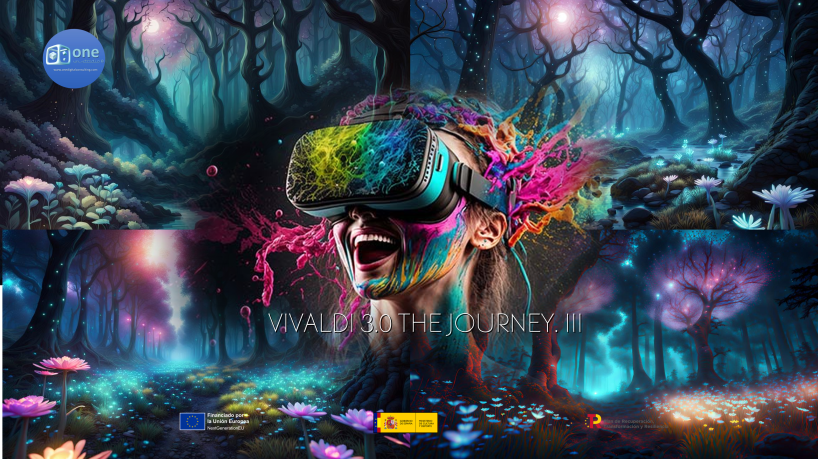
VIVALDI 3.0 THE JOURNEY. III

“Journey Through the Immersive Universe of Four Seasons” is an interactive xr experience that immerses viewers into the realm of Antonio Vivaldi’s musical masterpieces. Through visually compelling storytelling, participants will delve into Vivaldi’s creative journey as he breathes life into his renowned concerto “The Four Seasons.” Each season unfolds in a distinct and captivating environment, seamlessly blending natural elements and music to deliver a multisensory and enchanting encounter.

Journey Through the Immersive Universe of Four Seasons” is an interactive xr experience that immerses viewers into the realm of Antonio Vivaldi’s musical masterpieces. Through visually compelling storytelling, participants will delve into Vivaldi’s creative journey as he breathes life into his renowned concerto “The Four Seasons.” Each season unfolds in a distinct and captivating environment, seamlessly blending natural elements and music to deliver a multisensory and enchanting encounter.

As artists, musicians, and creatives, we find ourselves at a true crossroads—a junction where making the right choices is neither easy nor singular. Beyond the numerous apparent opportunities before us, we must navigate financial survival and address the sustainability of teams, technicians, and the myriad fellow travelers who render our projects minimally viable and appealing to an ever-changing society hungry for new, distinct, and increasingly participatory experiences.

Our journey began over a decade ago with our first forays into immersive 360º recordings, collaborating with artists, musicians, and music classrooms. Here, we began to experiment and learn from the sensations and perceptions conveyed by users, students, and teachers.

One of the pivotal moments in our journey was the first live performance featuring renowned artists like Ouka Leele, where we embarked on an interactive interpretation inspired by the sounds of the Concerto de Aranjuez. It was a fascinating experience, devoid of prior rehearsals or experiential training, executed on a digital stage using Oculus Rift equipment and Tilt Brush from Google, and recorded in 360º stereo with Vuze 360º cameras. This opportunity to recreate Digital Ephemeral Art raised initial doubts regarding feasibility, sustainability, and monetization in more straightforward and economically accessible spaces, as we spared no means or resources for this performance. Crucially, this experience was made possible through the indispensable collaboration of CEVs technical team.

Later on, we delved into the world of reconstructing the virtual museum of the Arab Kunka (Cuenca ancient city)—a collaborative, immersive space within the Frame VR platform. Here, we established a connection between the virtual reconstructions of the Ancient Kunka during the Arab era and the music of the great musician and composer Chema Vílchez, particularly his work “The Land of the Three Cultures”.

As visitors strolled through the ancient Arab fortress, its mosques, baths, buildings, markets, and streets, they were enveloped in the sound of music that transported them to bygone eras, while also being able to explore current spaces through 360º videos. This interconnection between virtual reconstructions, current videos, and music elevated the experience to a higher level, almost teleporting participants to that magical bygone time.

Years later, the Reina Sofia Higher School of Music presented us with a truly intriguing challenge. We were tasked with creating an experience using recordings from a classical music concert to reach students in their educational program who, due to pandemic-related time constraints, were unable to participate in workshops and concerts. This concert was recorded in the Sony auditorium of the school, utilizing 360º 4K cameras and ambisonic microphone technology. The acoustical characteristics of the auditorium are truly exceptional, enabling us to produce recordings of the utmost quality. We utilized Vuze and Zoom equipment, as well as VR devices from Pico, with technological support from HP.

This experience allowed us to craft 12 virtual musical stories centered around artists such as Mozart, Tchaikovsky, and Respighi, where musical compositions intertwined with natural spaces, sensory explosions, and magical worlds, transporting visitors through 12 unique historical narratives. As a result of this endeavor, we developed “Music with the Five Senses,” which was implemented on a Virtual Reality platform and Pico devices, visiting hundreds of schools and educational centers nationwide over the years. Thousands of visitors have immersed themselves in this wonderful and experiential world, making it a true milestone and international benchmark as an immersive educational project centered around classical music.

The next stop on this journey is Vivaldi 3.0. The Journey to the Universe of Antonio Vivaldi and the Four Seasons, led by Ara Malikian and the Camerata of the Reina Sofia School, has been a mystical experience, with a predetermined start date and script, and a long journey through the forests of magical seasonal music. Along the way, we’ve encountered numerous passages and experiences that ultimately culminated in an absolutely magical work. This journey, based on Vivaldi’s original sonnets, reinterpreted by a team of writers and Ara himself, allowed us to rediscover the connections between music, nature, and the cycle of life. Throughout this process, we’ve painted on a virtual canvas, initially blurry passages gradually taking shape into a metaphorical interpretive tableau. Throughout this process, we’ve immersed ourselves in music and creativity, repeatedly playing with the tools offered by generative artificial intelligence, which helped us reinterpret passages and scenarios through Vivaldi’s sonnets and words, Ara’s interpretations, and our own way of composing this tableau, ultimately giving it a cohesive and coherent form. We aimed for it to be timeless, appealing to various types of audiences, inviting them to return to a childlike state and be carried away by the creative spirit of the compositions and the intersection with the cycle of life, both human and natural. And all this, with a commitment to sustainability, balance, equality, and educational vision through values inspired by the emotions and sensations we’ve gathered in the project. This is our way of contributing to the awareness of the need to accelerate societal transformation.

The first test to visualize the outcome of this initial step of the project was the concert held on January 29th at the Sony auditorium of the Reina Sofia School. It was a real trial by fire, where we had to present this new proposal for an interactive multimedia concert live to a select audience: students and teachers from various schools in the Community of Madrid. It was a multimedia experience where interactivity through monitors and screens, interactions among musicians on stage, Ara Malikian’s performance, his introductory messages for each movement, and images, passages, and videos related to the movements were put to the test.

More than 600 students from a dozen public and private schools in the Community of Madrid, accompanied by their teachers in two sessions, were able to enjoy this experiential session, with an extremely high level of satisfaction. And all this was made possible thanks to the perfect coordination between the ONE team and the production, audio, and video team of the School. We had top-of-the-line equipment and professionals of the highest caliber. The journey has only just begun, and this experience has allowed us to analyze and evaluate the initial results, and to envision how we can continue advancing and projecting new immersive experiences in the immediate future. We aim to enhance the experience by integrating 3D multimedia elements more extensively, as well as enhancing the pre- and post-concert experience.

Welcome to the interactive immersive world of Vivaldi 3.0. Step into a space where reality merges with imagination, where every corner is filled with magic, and music awaits you at every turn. As you enter the world of the four seasons, you’ll find yourself surrounded by vibrant landscapes pulsating with energy and creativity. Feel the thrill of immersing yourself in a world where the boundaries of reality blur, and your senses awaken like never before. Interact with the environment around you: touch, explore, listen, and engage with the elements inhabiting this fascinating world. Whether you get lost in enchanted forests or dive into the depths of the unknown, each experience is yours to discover and shape. Prepare to be captivated by the sights, sounds, and sensations enveloping you as you delve deeper into this immersive universe throughout the cycle of life.

So, welcome to a world where dreams come to life, and the extraordinary awaits you around every corner! Let your curiosity guide you as you embark on an exciting and unforgettable journey through the Interactive Immersive Universe of Vivaldi’s Four Seasons.

Here are some figures reflecting and highlighting the extraordinary effort involved in this journey: An experience recorded and produced in 6 months, many locations, involving more than 50 professionals and over 4,000 hours of work, recording 4 live concerts with the attendance of over 1,000 people (students & teachers) from 20 schools. An immersive experience available on VR devices and the Web XR immersive platform, featuring 4 spaces, or “stations,” with interactive games, integration of 3D volumetrics, hundreds of photographic images, 10 hours of concert recordings in 8k, several terabytes of video and sound files, hundreds of hours of processing and post-production, hundreds of hours of editing and format integration…hundreds of images generated by AI to create virtual spaces and environments, artificial intelligence and image processing, 8K 360º cameras, ambisonic sound, creation of countless 3D assets

8K Enables Immersive Vivaldi 3.0 Project

By Bob Raikes

…and this is just one of the stops on this magical and unique journey.

Carlos J. Ochoa Fernández ©

Metaverse is ready for Education

Over the course of the past two decades, I have been fortunate enough to engage in groundbreaking initiatives within the realm of digital transformation in education. Today, as we grapple with contrasting viewpoints on whether the #Metaverse holds promise as an educational tool or is merely a rehashed concept, I wish to offer my insights on the matter.

“A Reflection on Virtual Worlds and Their Contribution to Education”

Over the course of the past two decades, I have been fortunate enough to engage in groundbreaking initiatives within the realm of digital transformation in education. Today, as we grapple with contrasting viewpoints on whether the #Metaverse holds promise as an educational tool or is merely a rehashed concept, I wish to offer my insights on the matter.

To me, the #Metaverse embodies a realm where Time and Space engage in a game of strategy, akin to a game of chess. Drawing inspiration from Albert Einstein’s musings: A human is an integral part of the cosmos we term the Universe—a fragment confined by time and space. But so what?

The crux of the matter lies here: the interplay between Time and Space.

Metaverse versus Universe, and Human Being versus Avatars—these interactions hinge on the relationship between time and space.

In the spheres of art and music, artists have fashioned #MetaphoricalUniverses or #EphemeralUniverses —spaces and encounters that are unparalleled, transient, experienced in the present, and then fade away.

Virtual Worlds offer us this same potential but with the power to amplify it manifold into new, boundary-defying dimensions. This expansion reaches individuals and groups who might otherwise never have had the chance to connect in such an environment.

The term #Metaverse, though rooted in technological definition, has acquired a mythical aura and has been employed in ways that fail to captivate. Presently, describing or elucidating the societal advantages and opportunities afforded by #ImmersiveTechnologies presents a challenge. This is due to the term’s misappropriation and dilution by entities possessing an insufficient grasp of the profound intricacies and context of the technology at hand.

In 2003, I embarked on a transformative journey that led my past company, eLearning Consulting, to evolve an eLearning platform into a cutting-edge virtual educational platform known as “Edutopia.” This ambitious endeavor marked my foray into the realm of 3D worlds and virtual reality, bridging the gap between schools, educational communities, and innovative technology. Edutopia introduced avatars, interactive games, and an array of tools tailored for teachers, students, collaboration, monitoring, and evaluation—accessible from any PC.

My dedication bore fruit as thousands of students in Spain gained free access to this groundbreaking platform, supported by funding from the Ministerio de Educación, España.

Over two decades, my commitment to innovation in education extended to active involvement in classroom innovation programs and collaborations with prominent publishers. This commitment also manifested through investments in Research and Development programs under the aegis of the European Commission, resulting in the realization of several globally renowned projects.

In 2013, my endeavors expanded beyond education as we developed pioneering simulators and digital twins for the industrial sector. Subsequently, in 2017, I launched the #SmartEducationLabs initiative for the Ministry of Education in the United Arab Emirates (UAE). This groundbreaking project championed advanced education and the digital transformation of classrooms.

This legacy persisted through 2022-23, marked by my instrumental role in establishing Advanced Labs and a Virtual Campus for Madrid’s gaming industry. This Virtual Campus is uniquely focused on nurturing entrepreneurial skills within the realm of video games and immersive experiences, ultimately fostering innovation within the gaming sector.

If you want to know more, please visit #MetaMinutes with my friend Rene Schulte here: https://lnkd.in/d5WXRf3P

If you want to know more about #SmartEducationLabs, visit
https://lnkd.in/dZciTDGa

Carlos J. Ochoa Fernández ©

The Future of Immersive Technologies is to focus on the Value Chain

In times of uncertainty, investments must be accompanied by calm reflection when selecting our travel partners and not just service or product providers.

Today I want to invite you on a journey from the origins of interactive graphics systems to the world of the metaverse with my friend Marlon Molina.

I want to share with all of you the recent interview that the prestigious Computerworld University conducted with me through an old fellow traveler from the early days of Geographic Information Systems, Marlon Molina.

This a unique and passionate opportunity, in which we remember our steps and experiences in the graphic industry, for more than 30 years, Marlon at Intergraph and I at Siemens.

A time in which we feel like authentic active pioneers, and with the luck of being able to share these experiences with the new generations of enthusiasts of the interactive graphic world.

After a brief and charming conversation about the origins of digital image processing, the leadership of Silicon Graphics workstations (all major film productions used this technology, animation and simulation studios, etc…) and its disappearance by complete at present. Coming to the conclusion that the evolution of technology in recent years, leaves us with lights and shadows uncovered, which are repeated today and against which we must remain on guard.

In times of uncertainty, investments must be accompanied by calm reflection when selecting our travel partners and not just service or product providers.

After this brief review of the history of the interactive graphic world, we take a tour of the current state of immersive technologies, #virtual reality, #augmented reality, #Immersive experiences, the #Metaverse, and the new Vision from ONE Digital Consulting.

And one of the first reflections that come to mind is the insistence of the big manufacturers in selling us a wonderful, virtual and better world, without asking me if I am interested, if I like it, or if I simply prefer to solve the problems of this world. from my freedom, intelligence, and personal decision.

Join me in this conversation, only for fans of advanced technologies and their application to real industry. I hope you enjoy it as much as we did during the interview. I am looking forward to hearing your comments.

https://www.computerworlduniversity.es/tendencias/concentrarse-en-la-cadena-de-valor-es-la-clave-para-el-exito-de-la-realidad-virtual-y-aumentada

Have a great and wonderful day.

Carlos J. Ochoa Fernández ©

Building the Big Forest

I would love to share a very inspirational and personal conversation with Yoshi Garnica, from Impact Revolution.

Disreality is a fantasy journey into the human psyche that takes you on a ride through the twists and turns of that blurred line between what is real and what isn’t. Along the past recent years, let´s defined it as a hybrid experience, I have been walking around the universe of senses, emotions, arts, and social interaction in virtual worlds, as a real opportunity to build a free, democratic, and more sustainable world.

Nowadays, I am truly convinced that we need to act NOW. Tomorrow is too late.

All these reflections come to my mind during the several interviews, sessions, and talks with very good friends of the XR Community. I must say, thanks to all of you, for allowing me to walk along with you and learn together on these “long and winding road of immersive technologies”.

You can watch the complete interview here:

Key insights from the interview:

✳ He is living now in a privileged place: Guadarrama Natural Park – https://bit.ly/3dDukjB

✳ Happiest moment in Life: When he becomes a dad – holding his kids.

✳Last Impact Message to the world: “Build a big forest” – Metaphor to build a “big community” as a base for sustainability growth.

✳ The Education system is hard to Change.

✳Blade Runner 2049 (https://bit.ly/3A1Z5WQ is an example that VR did not change that much since 2017.

✳Experience with building Smart Education Labs with VR

✳Important to increase Accessibility of Technology to poorer countries – Reminded me to our last interview with Alfredo Serrano 🙏

✳Favorite professional project: “Music with 5 senses” – Virtual Concerts to CONNECT:

Arts 🔗 Creativity 🔗 Values 🔗 Nature🔗 Citizens

✳VR could help the Coaching Industry facilitate Engagement, Empathy, and Connection. Important the Environment, Story, and Technology used (for interaction). OpenBCI uses Neuroscience with VR.

✳Last Impactful message to Startups and Entrepreneurs ❤: Unique vision, Build Trust, Work a lot, Value Time, Strong Team, Good mentors, Create a Business Plan (importance of performing a Market Analysis, know your competitors!)

Was a great interview Carlos – Many thanks for sharing your valuable time with us. It’s much appreciated.

Best of luck in Revolutionizing the Education System!

All your thoughts and comments are very welcome.

Have a great time.

Carlos J. Ochoa Fernandez

Remembering my time as a student at Babson College.

One of my very best personal experiences throughout my long professional career was being a student in the International Entrepreneurship program at Babson College.

One of my very best personal experiences throughout my long professional career was being a student in the International Entrepreneurship program at Babson College.

In 1998, my past company Siemens decided to anticipate the competition, developing a joint program with Babson College to develop the Entrepreneurial spirit within the organization. Raising the talent of high potential and creating high-performance teams, capable of accelerating the transformation of a product company, into high-value-added services.

I was one of those selected for that program and thanks to that experience, allowed me to develop skills and abilities that helped me design and implement new global business areas at an international level, with a focus always on innovation.

A one-year international program, with professors from the most prestigious business schools, the participation of all managers of business centers and CEOs from different regions, in a spectacular and highly collaborative environment.

I seem to remember that this was one of the first international experiences of this type carried out by Babson College, between 1998 and 1999.

An unforgettable experience and I must thank Siemens and Babson College for that opportunity, whose principles continue to be a world reference today.

Carlos J. Ochoa ©

Las Claves para implantar las Tecnologías Inmersivas en la Educación.

Education is a system; teaching is an action; learning is a process. Terry Heick

Regulación y ética para máquinas, un desafío para los humanos
Analizamos el paradigma tecnológico al que se enfrenta el ser humano desde el punto de vista de los profesionales.

Educar, Educar y Educar…

¿Cómo vamos a formar en realidad virtual? La clave está en “educar, educar y educar”. De esta premisa parte Carlos J. Ochoa Fernández , fundador y CEO de ONE Digital Consulting y Co-Chair VRARA Metaverse on Dec 17 Education Committee, quien visitó nuestro auditorio en una de las sesiones del XR Fest.

Educar de forma transversal en nuevas tecnologías y crear documentos dirigidos a los centros educativos que aporten valor y formen al profesorado, es una tarea ardua pero necesaria. El primer paso es analizar el perfil de los profesores. En ocasiones, –comenta Ochoa– “queremos formar a gente o profesionales que son reacios o que no tienen la formación adecuada para luego impartir a los alumnos”.

Desde su organización, proponen un escrito de buenas prácticas donde reflexionan sobre la ayuda que necesitan los colegios, los docentes y los decisores para comprender la tecnología y ver el sentido de su aplicación en los métodos de enseñanza.

Marjorie NETANGE, directora de Desarrollo y Comunicación de la Escuela Superior de Música Reina Sofía, coincide en que “el docente tiene que trabajar su metodología en términos de cómo integrar la tecnología puntualmente”, pero sostiene que parte de su programa debe seguir una línea tradicional.

Según Angeles Heras Caballero, secretaria de Estado de Universidades de Ciencia, Investigación, Desarrollo e Innovación, es necesario orientar a los alumnos de universidades y posgrados hacia un futuro tecnológico. En España, ya se ha puesto en marcha la construcción de un Comité Científico de Ética, pero es imprescindible que estas normas coexistan con el resto de los actores empresariales, asociaciones e incluso, con otros Estados.

Una sesión, presentada y dirigida por Elena González de la Fuente, responsable del Espacio Fundación Telefónica.

Y con la participación de Ian Forrester, responsable del departamento de I+D de la BBC, el R&D Future Experiences, Pedro Lozano Alcolea, fundador y COO de Imascono, Marjorie NETANGE, directora de Desarrollo y Comunicación de la Escuela Superior de Música Reina SofíaCarlos J. Ochoa Fernández, fundador y CEO de ONE Digital Consulting y presidente de la Asociación VRARA Madrid y co-presidente global del Comité de VR Education de VRARA Metaverse on Dec 17, y Gonzalo Ruipérez García, CTO en EstudioFuture.

XRFEST , Fundación Telefónica Junio 2019.