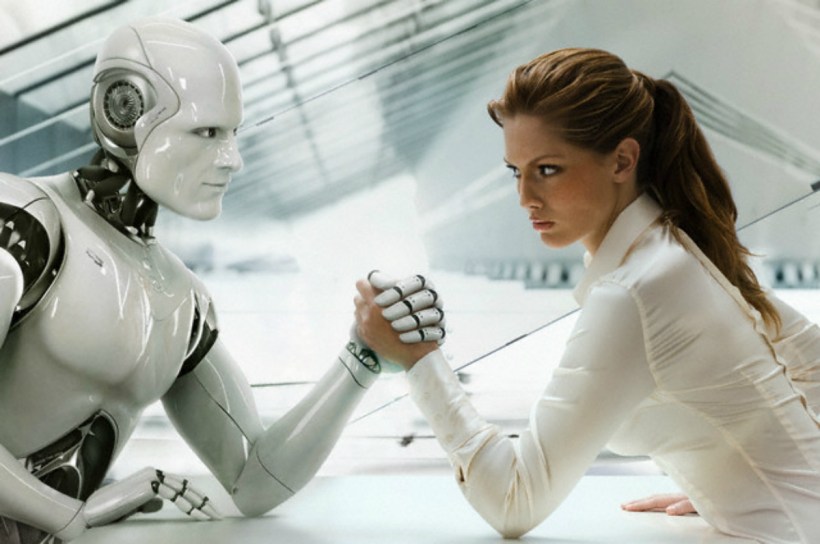
Advanced XR Project Development: A Comprehensive Guide

In the digital age, high-quality content is essential for engaging and retaining audiences, as well as provide value and resolve problems to real life. It helps build trust, establish authority, and drive traffic. Compelling content can differentiate a brand, provide value to the audience, and foster community engagement.

In the digital age, high-quality content is essential for engaging and retaining audiences, as well as provide value and resolve problems to real life. It helps build trust, establish authority, and drive traffic. Compelling content can differentiate a brand, provide value to the audience, and foster community engagement.

Experience brings things to life, creating immersive and memorable moments that engage the senses and emotions. On the other hand, content touches the heart, the senses and the perception of being there, resonating on a deeper level by conveying stories, ideas, and emotions that connect with the audience. Together, they form a powerful combination: a rich experience that captivates and meaningful content that inspires.

In the development and implementation process of advanced “XR projects, I have had the opportunity to work with highly potential and excellent teams in design and development. However, there are still some barriers that make the design of the solution and the concept require a fundamental effort to have an initial global vision.

This vision should enable us to visualize what we are going to offer our target audience, what we intend for them to feel, do, play, get excited about, or even hate us forever. Playing with emotions is something magical that requires constant feedback and user testing. But if there’s something fundamental to capturing the sensations and emotions of the user, it is designing a captivating and immersive user journey. This is one of the key elements for success when tackling a complex immersive project.

Then, we have the earthlier, yet no less complex, problems: the technologies to apply, data and information formats, their integration, functionality, programming, and the means or devices where the experiences will be developed and enjoyed. These are just a few pieces of the puzzle that requires a very detailed and well-crafted workflow to achieve the objectives we set at the beginning.

One of the fundamental parts of the initial design is considering the types of content and context we will create and how we can reuse them in the future. Creating these assets, videos, animations, and volumetric captures is extremely costly, and their integration and reuse will allow us to ensure continuity for the project or its future developments. This is often forgotten. While it’s true that it’s not an easy task, if we approach it well, we will achieve significant savings and benefits in the future.

Creating the most innovative and advanced XR (Extended Reality) experiences requires pushing the boundaries of technology and creativity.

Let me share with you some insights an in-depth guide to achieving this:

a. Conceptualization and Planning.

   – Innovative Vision: Aim for a unique concept that leverages the latest XR trends and technologies. Consider incorporating AI, machine learning, and real-time data integration.

   – Comprehensive Objectives: Define sophisticated goals, such as hyper-realistic simulations, complex interactive storytelling, or groundbreaking educational tools.

   – Advanced Target Audience Analysis: Conduct deep research on your audience to understand their technological adeptness, preferences, and potential use cases.

b. Design phase.

   –  Advanced Storyboarding and Scripting: Use detailed storyboards with advanced techniques like branching narratives and non-linear storytelling. Ensure scripts accommodate complex interactions and AI-driven content.

   –  Cutting-edge UX/UI Design: Design intuitive and immersive interfaces with advanced interactions like eye-tracking and gesture controls. Utilize user experience testing tools like heatmaps and biometric feedback.

   – High-Fidelity Art and Asset Creation: Create hyper-realistic 3D models, textures, and animations using advanced tools like Substance Painter, ZBrush, and photogrammetry. Consider procedural content generation for dynamic environments.

c. Development phase.

   –  State-of-the-Art Platforms: Choose platforms that support the latest XR innovations. Unity and Unreal Engine are industry standards, with Unreal Engine being particularly powerful for photorealistic graphics.

   – Innovative Interaction Models: Implement advanced interaction models such as hand-tracking, eye-tracking, and haptic feedback using technologies like Leap Motion, Tobii Eye Tracking, and haptic devices.

   – Programming and Scripting: Develop complex behaviors and interactions using advanced scripting languages and frameworks. Unity uses C# while Unreal Engine uses C++ and Blueprints for visual scripting.

   – AI and Machine Learning Integration: Leverage AI for adaptive learning experiences, dynamic content generation, and personalized user interactions. TensorFlow and PyTorch can be integrated for machine learning capabilities.

d. Q&A, Testing and Iteration.

   – Comprehensive Testing: Conduct rigorous testing across various devices and environments. Use advanced debugging tools and performance profiling to ensure seamless experiences.

   –  Beta Testing with Advanced Analytics: Use beta testing phases with detailed analytics to gather data on user interactions, preferences, and technical performance.

   – Continuous Improvement: Implement feedback loops with real-time updates and continuous integration/continuous deployment (CI/CD) pipelines. Use, standard tools for collaboration and fast operation, Teams is a very powerful tool..

e. Delivery.

   – Optimized Packaging: Optimize the final build for performance across different platforms, including VR headsets, AR glasses, PC, tablets and mobile devices. Use asset streaming and level-of-detail (LOD) techniques for performance optimization.

   – Advanced Deployment: Utilize cloud-based distribution platforms for real-time updates and content delivery networks (CDNs) to ensure fast, global access.

   – Post-Launch Support: Provide ongoing support and updates. Implement advanced monitoring and analytics to track performance and user engagement.

Tools and Technologies

–  Development Engines: Unity, Unreal Engine

–  3D Modeling Software: Blender, Maya, 3ds Max, ZBrush

–  Texturing and Painting: Substance Painter, Quixel Mixer

–  AI and Machine Learning: TensorFlow, PyTorch

–  Performance Optimization: NVIDIA Nsight, Intel GPA

–  Collaboration Tools: Jira, Confluence, Slack, Teams

–  Testing Tools: Oculus Debug Tool, SteamVR Performance Test, Pico Deb

–  Video Production: Adobe Premier, Final Cut, DaVinci Resolve

–  Video 360º: Canon, Insta, Kandao

–  Ambisonic sound: Zoom, Sennheiser

Best Practices

–  Pushing Visual Fidelity: Utilize high-resolution textures, advanced lighting (like ray tracing), and realistic physics to create stunning visuals.

Innovative Interactions: Implement and experiment with the latest interaction methods, ensuring they add value and enhance immersion.

–  Scalability and Flexibility: Design your XR experiences to be scalable and adaptable to different platforms and future technologies.

–  User-Centered Design: Keep the user at the center of the design process, ensuring that advanced features enhance rather than complicate the user experience.

–  Ethical AI Use: Ensure that AI and machine learning applications respect user privacy and data security.

I do not intend to give a master class in XR content design and development with this, but rather a simple support guide, which we will develop in more depth based on years of industry experience.

By combining cutting-edge technology, innovative design, and rigorous development processes, you can create advanced and immersive XR experiences that stand out in the rapidly evolving XR landscape.

Carlos J. Ochoa Fernández ©

Carlos J. Ochoa “un guiño a la Educación”

“Apostando fuertemente por un nuevo modelo educativo, ilusionante, empático, inclusivo, democrático y sostenible

Presidente VR/AR Madrid Chapter, Co_Chair del Comité de Educación y miembro fundador de Immersive Learning Association, ICICLE X-Reality for Learning and Performance Augmentation SIG. También es fundador y CEO de ONE Digital Consulting, así como autor del Libro Blanco “Best Practices of VR in Education”.

Entrevista realizada por Sonsoles Gallego para Miranos y Unete 2019

Ayer

Empezamos por su infancia, por conocer a ese niño que todos llevamos dentro.

¿Cómo fue su etapa de estudiante?

Recuerdo mi etapa de estudiante como una sucesión de historias emocionantes, irrepetibles y únicas. Años en los que descubres todo con emoción, ilusión y sorpresa. A pesar de ser tiempos difíciles, como fueron los años de la transición, también fueron una oportunidad única para descubrir el valor de las cosas, la necesidad permanente de aprender y establecer amistades con fuerte arraigo que siguen conmigo hasta el día de hoy.
¿Qué recuerdas de ella?

Tuve la inmensa suerte de comenzar el bachiller en el Instituto Ramiro de Maeztu, en la antigua residencia de estudiantes. Un espacio privilegiado, con profesores muy buenos y compañeros extraordinarios. Allí fueron mis comienzos obligados en el baloncesto “Estudiantes” y en la música (otra de mis grandes pasiones), el arte y el cine fórum…en fin. Allí se fue perfilando mi personalidad y algunas de mis aficiones. Tiempos de desarrollo personal, aficiones y bocatas de mejillones…en la Cantina. Y por cierto, íbamos al “insti” en tranvía, el 27, en donde nos colábamos todos los días…)
¿Algún profesor especial?

Bueno, me vienen varios a la memoria. En especial el Sr. Cebada, profesor de matemáticas (una persona entrañable y gran fan del Rock de los 70) y con el que entablé muy buena relación a lo largo de los años. La Sra. Burgos de geografía, historia y arte y que, por casualidades de la vida, coincidí en Siemens con su hijo como compañero de trabajo por varios años. De la Universidad guardo extraordinarios recuerdos de profesores y posteriormente compañeros y amigos. Algunos de aquellos me ayudaron a centrarme profesionalmente y encarar una nueva fase de mi vida con gran vocación disfrutando inmensamente. Recuerdo emocionadamente las clases de Astronomía y Geodesia, las de Fotogrametría y Teledetección, las observaciones a los astros desde la terraza del Instituto Geográfico Nacional… 

¿Cómo fueron sus inicios en la innovación, la realidad virtual y aumentada?

Mi primer gran reto fue en mis inicios profesionales en la Ingeniería, trabajando en Typsa y participando en los años 80 en proyectos de Cartografía Digital, con los primeros ordenadores de Floppy Disk, pantallas graficas Tektronics, los primeros ploters…etc. En Siemens estuve formándome en IT y Geosistemas de Información en Alemania, incorporando la simulación a los proyectos de Ingeniería Avanzada, en los años 90. Y posteriormente en Eptron comenzamos con proyectos de I&D en Realidad Virtual, desarrollo de los primeros navegadores virtuales educacionales y contenidos digitales para el Aula. Esta etapa la recuerdo como la época de Jurasic Park, y las estaciones de trabajo Silicon Graphics. Éramos realmente unos adelantados a nuestro tiempo, en los inicios del nuevo siglo. En 2015 comienzo este nuevo proyecto profesional y me incorporo a la Asociación de VR/AR y el Comité de Educación. A lo largo de estos últimos años, he estado participando en distintos proyectos nacionales e internacionales de VR/AR en la Educación, la Formación y la Ingeniería.

Hoy

Palabra que define su trabajo: Pasión por la innovación.

Proyectos actuales: 

Recientemente he sido seleccionado como experto internacional del iLRN State of XR and Immersive Learning 2019-20. El objetivo fundamental, es crear un Panel de expertos internacionales equilibrado entre líderes académicos y de opinión de la industria, visionarios e innovadores que representen la totalidad del aprendizaje de K-12, a través de la educación superior, el espacio laboral, la comunidad educativa y el aprendizaje permanente.

Así mismo, sigo empujando la iniciativa de “Schools of The Future” que contaré más detalladamente en el Congreso.

Mañana

Haz un guiño a la educación:

Apostando fuertemente por un nuevo modelo Educativo, “Ilusionante, Empático, Inclusivo, Democrático y Sostenible”, capaz de liderar la Transformación Digital, Innovando eficientemente y eliminando barreras de todo tipo.

Especial ponente en el II Congreso de Influencers Educativos

Breve resumen de su Ponencia en el II Congreso de Influencers Educativos:
“Espacios y Experiencias Inmersivas en Educación 4.0”. Las nuevas tecnologías son aplicadas cada día en la industria y nuevos modelos emergentes, que crean importantes oportunidades de empleo y posibilidades de desarrollo empresarial. De acuerdo con las proyecciones establecidas por la Comisión Europea recientemente, la demanda del mercado en especialistas calificados en tecnología de la información y las comunicaciones (TIC) no se cubrirán, ya que en 2020 habrá un déficit de alrededor de 500,000 profesionales de las TIC. Siendo los profesionales de realidad virtual y aumentada los que se encuentran entre aquellos más solicitados en el sector de las TIC.

Es en este contexto vamos a desarrollar un Taller sobre “Formación de Profesores” en las habilidades relevantes para la formación en el aula, la formación y capacitación para el empleo y el desarrollo del espíritu empresarial basado en estas tecnologías.

Entrevista realizada por Sonsoles Gallego.

Las Claves para implantar las Tecnologías Inmersivas en la Educación.

Education is a system; teaching is an action; learning is a process. Terry Heick

Regulación y ética para máquinas, un desafío para los humanos
Analizamos el paradigma tecnológico al que se enfrenta el ser humano desde el punto de vista de los profesionales.

Educar, Educar y Educar…

¿Cómo vamos a formar en realidad virtual? La clave está en “educar, educar y educar”. De esta premisa parte Carlos J. Ochoa Fernández , fundador y CEO de ONE Digital Consulting y Co-Chair VRARA Metaverse on Dec 17 Education Committee, quien visitó nuestro auditorio en una de las sesiones del XR Fest.

Educar de forma transversal en nuevas tecnologías y crear documentos dirigidos a los centros educativos que aporten valor y formen al profesorado, es una tarea ardua pero necesaria. El primer paso es analizar el perfil de los profesores. En ocasiones, –comenta Ochoa– “queremos formar a gente o profesionales que son reacios o que no tienen la formación adecuada para luego impartir a los alumnos”.

Desde su organización, proponen un escrito de buenas prácticas donde reflexionan sobre la ayuda que necesitan los colegios, los docentes y los decisores para comprender la tecnología y ver el sentido de su aplicación en los métodos de enseñanza.

Marjorie NETANGE, directora de Desarrollo y Comunicación de la Escuela Superior de Música Reina Sofía, coincide en que “el docente tiene que trabajar su metodología en términos de cómo integrar la tecnología puntualmente”, pero sostiene que parte de su programa debe seguir una línea tradicional.

Según Angeles Heras Caballero, secretaria de Estado de Universidades de Ciencia, Investigación, Desarrollo e Innovación, es necesario orientar a los alumnos de universidades y posgrados hacia un futuro tecnológico. En España, ya se ha puesto en marcha la construcción de un Comité Científico de Ética, pero es imprescindible que estas normas coexistan con el resto de los actores empresariales, asociaciones e incluso, con otros Estados.

Una sesión, presentada y dirigida por Elena González de la Fuente, responsable del Espacio Fundación Telefónica.

Y con la participación de Ian Forrester, responsable del departamento de I+D de la BBC, el R&D Future Experiences, Pedro Lozano Alcolea, fundador y COO de Imascono, Marjorie NETANGE, directora de Desarrollo y Comunicación de la Escuela Superior de Música Reina SofíaCarlos J. Ochoa Fernández, fundador y CEO de ONE Digital Consulting y presidente de la Asociación VRARA Madrid y co-presidente global del Comité de VR Education de VRARA Metaverse on Dec 17, y Gonzalo Ruipérez García, CTO en EstudioFuture.

XRFEST , Fundación Telefónica Junio 2019.

Humanos Virtuales en el #Metaverso. ¿Y ahora que?

Fija tu rumbo a una estrella y podrás navegar a través de cualquier tormenta. Leonardo Da Vinci.

Humanos Virtuales en el #Metaverse. Congreso Digital Enterprise Show en #Madrid. Parece que, en los últimos meses, y en particular, desde que Mark Zuckerberg lanzó su proclama sobre Meta, ya todo se ha vuelto Meta-Verso. Y algo más que una metáfora, es una nueva dimensión a un mundo paralelo y finito, y que aún hoy, tiene muchos laberintos por desentramar…¿Estamos listos para ello?

El pasado mes de mayo tuve el inmenso placer de presentar estas reflexiones previas en torno a los Meta-humanos, en el Panel de VRARA del Congreso DES celebrado en Madrid y aquí os dejo el video de la presentación.

https://youtu.be/1QGRvcQiWqE

Desde ONE Digital Consulting, llevamos años desarrollando e implantando plataformas virtuales inmersivas para la educación: Talleres, Masterclasses, Formación de Profesores, Proyectos Colaborativos…en donde miles de estudiantes y profesores han participado de esta experiencia, viviéndola de una manera muy innovadora, inspiradora y positiva.

Estas experiencias nos han permitido desarrollar actividades On-Line, en modo síncrono y asíncrono en varios centros y países del mundo. Desde Estados Unidos, a la India, Rusia, Latino América, Europa, España…y contando con los mejores y mas experimentados colaboradores a nivel internacional. Algo inimaginable hace algunos años, hoy marca un punto de inflexión hacia el nuevo paradigma de una Educación Digital, más inclusiva, participativa, colaborativa, inspiradora, igualitaria, limpia y sostenible.

Cualquier comentario, es siempre bienvenido

Carlos J. Ochoa Fernández ©

Reimagining Business Performance with Industry XTR

Industry XTR, are we facing the new paradigm?

Never give up on your dreams. John Ford

It is true that Covid has been a serious blow in the advance towards Industry 4.0 in those companies in transition. Being seriously affected the processes of digital transformation, production, logistics, dependence on raw materials, etc., increased by the lockdown of a large number of organizations. Accepting that 4 key pillars of Industry 4.0 are digitization processes, including standardization, development of new skills and workforce, disruptive innovation processes and investments, it is clear that COVID has paralyzed industrial activity worldwide. And we continue to suffer from its impact today …

After participating in the first face-to-face events and conferences during the last weeks, we meet again and discuss the “state of the art” of our companies, markets and new challenges that we will face in this new scenario.

And it is true, that even today, many are not able to assimilate, that nothing is going to be as before. Although the changes do not occur at the speed that some want us to see, it is true that many activation and acceleration mechanisms have already been put in place in some organizations. Strengthening them in leadership positions and others are being left behind, hopelessly.

If we analyze some of the pillars of Industry 4.0, it is in investments, standardization, skills development and disruptive innovation where the greatest imbalances have occurred. Clearly marking a before and after among some companies, which have been able to adapt to the new situation quickly and activate very solid innovation mechanisms. While others continue to try to compose themselves and return to a pre-pandemic scenario, as a valid point of reference.

Reimagining Business Performance with Industry XTR, are we facing the new paradigm?

Perhaps it is time to take a step further, seeking “exponential acceleration” and trying to find solutions to new problems that we would never have thought before would intercept our society in this way. So, continuing with the transition to Industry 4.0 again, today, no longer makes sense.

From my perspective, today, it is absolutely necessary to rethink the industry model, without trying to return to pre-pandemic scenarios, which would be a long delay and would take us back to 2019.

Rethinking Industry 4.0, facing a new Business Performance process, accelerating the digitization processes, through the integration of disruptive technologies, with the training of new skills, incorporating new forms of more efficient and remote collaborative work, developing assessment platforms, empowerment and loyalty of high-performance teams and decentralizing networks of supply and manufacturing in several poles and suppliers, seeking value in competition in efficiency and innovation, and not only in price, not so dependent on a single country.

Anticipate foreseeable future crisis situations, minimizing the risks and impacts of technological threats, lack of talent to lead change, cybersecurity and virtual transactions, new pandemics, energy crises, climate change, shortage of raw materials and logistics. Just to list a small series of them.

Those who have the new vision of Industry XTR, will be able to lead the transformation of society to a safer and more sustainable planet.

These are some reflections, while I have my cup of coffee and listening my jazz session. Today with Kenny Burrel, enjoy.

Thoughts and ideas are always welcome. Good afternoon and good luck from the RealVerse.

Carlos J. Ochoa Fernández ©

Chronicles from the #RealVerse. Chapter II

Don’t run so fast Metaverse. The great trap of the Meta Boomers.

Learn from yesterday, live for today, hope for tomorrow. The important thing is not to stop questioning. Albert Einstein.

We live in an increasingly ephemeral and unequal society. Where the truth hides behind thick layers of images, headlines, screens … and where the speed of things is unreal. I do not know if this unjustified rush is accelerated by the need to flee or escape from ourselves.

So little do we like each other? Do we want to be immortal? Do we want to be other? We do not accept reality? … what is the real question to this paradigm. Maybe the is another answer to that question.

In the real world, nothing moves so fast, nor does society demand such ephemeral generosity, rather democracy, justice, equality, transparency … Searching for the ubiquity of the human being, ethics, transparency, honesty, goodness … .life, still exist … and are all around us, despite the Meta Boomers.

After more than 30 years involved in engineering, advanced technologies and working on real world projects … believe me if I tell you, I have never lived a similar time before. Where everyone is a futurist, visionary, town crier, spokesperson … without adding the slightest ounce of value to society, or to its real problems. Showing once again, that ignorance is very daring.

One of the great barriers to acceptance of advanced technologies is that they are credible, convey truthfulness, solve real problems, and the majority of society accepts and employs them for their mutual benefit.

Yesterday, without going any further, I saw a TV program about advanced robotics, the complexity of programming. The design of processes to teach robots to learn, to program tasks that are very easy for a human, but highly complex for a robot, until the final test is performed. This is a space for little fantasy and a lot of hard work. Today, robotics, 3D, AI, is taught in schools since childhood, it is understood, its contribution, benefits, risks … it is accepted and it lives with us a little more every day.

But this has required a long period of training, development, successful implementation in production processes, at home, in industry, etc … and this is not easy, nor is it free.

However, the futuristic Meta Boomers, the newcomers to this futuristic world, discovered by them of the “Edge-Science”, find a context, where everything seems simple and they give free rein to the verb, without the slightest training and with a wide and generous ignorance of the fundamentals, technologies, risks and benefits that these paradises of the future hide … Oops, how scary …

It seems that, if today you do not talk about the Metaverse, you are not “cool” beings, or you simply are not and you are not even … experts in Creative, Educational, Communicative, Digital, and blablative Metaverse, who go even under the stones, even to dare to prophesy that “The Future is in the Metaverse” … Oops how scary

The news of the day, which sweeps the networks, is that Bermuda is in the Metaverse, everyone retweets, and hallucinates, without knowing the vast majority, not even where Bermuda is … in short, “breaking news”.

Barriers to entry? Here is one that spreads like weeds in a natural forest: the Meta Boomers, who are going to leave the field depleted before we wake up from our first dream.

20 years ago, I was extremely lucky to participate in the development of a virtual educational platform. It included customizable avatars, virtual tutors, virtual tours of natural landscapes, interactive games, spaces for teachers, students and parents. In short, an entire educational community based on client-server architecture with hundreds of value-added services: Edutopia. Thousands of children from hundreds of schools in Spain were online users of this platform, now obsolete and lost in the cloud. I have to honestly say that this was available to the entire educational community for free and was beyond many Goals to be drawn in the short-lived near future.

We will see how this continues in the next chapter of Chronicles from RealVerse, enjoying a cup of Colombian coffee listening to John Coltrane, by the way, something real and extraordinary.

Carlos J. Ochoa Fernández ©

Re-innovate or die. And now What else?

Innovate, change or alter something, introducing new features. This is how the dictionary of the real academy defines this word so repeated and with such insistence in these times. There is no doubt that innovation can be redefined in many ways and in fact, it is done and interpreted that way, but if we want to simplify the definitions and make them understand in a simple way, we could say that it is the process of redoing, reinventing something in a different, efficient way that adds value. Think different, act different, reinvent yourself, anticipate, imagine, dream and carry it out with all the passion you are capable of showing.

These have been the keys to the success of some visionaries of the 20th. century, but also that of man throughout the development of its history, however only a select few are on the list of geniuses. Innovation is permanently linked to the evolution of man and it is enough to look around us in an instant of our life, on a street or in an office and look at the elements that surround us and that just a few years ago did not exist and even were unimaginable to think of its single existence in the near future like today.

And it is the “imagination” that allows us to dream of a new world and innovation that materializes it and turns it into reality. These being the key pieces for the beginning of a new cycle, where integrity, intuition, responsibility and creative thinking will be a benchmark for the new visionary companies of the 21st century.

In this minimal corner of the cyber-space, we are going to unravel the keys to Innovation, the barriers we encounter on a daily basis, the potential solutions and the escape routes, in order to come up with a mini guide for entrepreneurs who have decided to reinvent themselves or reinvent their business, promoting innovation at critical points in the value chain of their businesses.

However, over the last few years, it has become clear that beyond innovation there is entrepreneurship. And it is vitally important to understand that “Innovation” has no value until you are able to create a business model around this idea and turn it into a product or service ready to be sold. If you are not able to turn an “Idea” into something that creates customers, this does not work.

And that is when the figure of the entrepreneur makes sense. And that is why it is important to clearly identify and differentiate between innovators and entrepreneurs.

An “Innovator” is fundamentally a creator, a person capable of solving or solving problems in a creative and differential way, with great passion for constant improvement. Innovators are fundamentally thinkers. But an “Entrepreneur” is oriented to action, to the construction or materialization of things. This includes the development of a business around an innovative idea, for its subsequent materialization.

Therefore, when an “innovator” approaches us, with that special sparkle in his eyes and says: !!! I have a great idea!!!.

The entrepreneur’s response is immediate: Can we materialize and monetize it? Who is your target customer? What is the business model? Why will customers go crazy with your product?

Investing in Innovation without a developed entrepreneurship model is like throwing flowers into the sea, they will never grow.

Carlos J. Ochoa Fernández ©

Lead or follow the leader?. This is the question.

From the most remote origins of humanity, the need to know and discover things has been a struggle for subsistence and the development of life itself on the planet. With its evolution, scientific discoveries and technological evolution and innovation, it became a fundamental lever of human activity. But it has been from the last centuries and especially in this last decade, when this role has grown exponentially, almost in parallel with the same growth of the world population. The world’s population reached 7.7 billion in mid-2019, having added one billion people since 2007 and two billion since 1994 and with strong and accentuated tensions between rich and poor countries. In which the main viability engine up to now was development and growth, and which from now on must reconsider at a global level a new sustainability model that allows a fair redistribution of raw materials and finite wealth, to do so viable in the medium term.

Faced with this situation, the need for adaptation has always been an exceptional quality of the human being and therefore, the need to seek ways of evolution and sustainable growth necessarily goes through the impulse of research, development and innovation in search of a coherent and sustainable progress in convergent areas of knowledge and at a different time in different spaces. That is, in a global environment, although “knowledge” is accessible to everyone in almost real time, its application in different parts of the planet is affected by the variable time and this must be adapted to the reality of each space in each moment. With this, the potential benefits obtained in a certain place are not always replicable in the same way in other spaces / different territories.

To go beyond space and time in search of common patterns and homogeneous development denominators, or what is the same, geopolitical borders and time, MegaTrends are defined. Definition that comes from the world of research and that aims to redefine a framework of global trends in the evolution of society applied to all its agents (state, society and market). Or put another way, it is the knowledge and prediction of our possible future, where convergent sciences and technologies must deepen the path of sustainability.

After reviewing and reading in depth different works and documents of experts and reference organizations, everything seems to indicate that over the next few years, we are going to find an exaggerated and uncontrolled population growth, especially in countries of the so-called third world, a growth of the countries of the western world close to 2%, while in so-called emerging countries this will be higher than 7%. An aging population in developed countries with a clear inversion of the population pyramid, with all that this entails, is very considerable. If we add to this, that to guarantee this model of average growth of 5%, we have scarce natural resources to supply the planet and finite energy resources to guarantee growth and development, it is necessary to review the model urgently or this process is simply not feasible.

In any case, Megatrends have a different meaning for different agents, states, companies or individuals. The prediction or definition of potential future scenarios does not guarantee in any way that this is the true future to occur, since the development of society and its interrelationships is happening temporarily and the parameters are permanently affected by different situations that affect the total of the formula. That is, the evolution and development over time and the impact on society and its agents, is affecting day by day in the new future or immediate future that is presented to us and therefore the scenario that we draw from our knowledge in Today may not be anything like the one we will achieve tomorrow. But thanks to these models, we will have been able to adapt and theoretically, thanks to the knowledge and application of science and technological innovation, improve it.

In our particular case, we are going to consider “Megatrends” as a methodology for the future strategic and innovative development of society and, in particular, of companies. This methodology, combined with others, can help us to elaborate the development and innovation framework of our company. But this is not a guarantee of success or failure, since the way of applying these methodologies, for some visionaries, is based on the definition of scenarios in which multiple variables interact and therefore, they must be constantly reviewed and updated, to control and evaluate the interferences between all of them and see how it affects the evolution of our prediction model.

The methodology proposed here is a compendium resulting from the study of the analysis of the most prestigious consulting firms, organizations, universities and international magazines in the new technologies and innovation sector.

Imagining a global world in 2030, how we will live and develop our vital activity, we have grouped into five large blocks the Megatrends that will guide the world throughout this period and in particular, what will be their impact on society, on business and how they will affect current companies and how they must position themselves today to achieve success in the immediate future. Development opportunities in the markets, their size and main stakeholders.

Once these Megatrends have been defined, we identify possible ways of development and innovation, as well as possible actions to take into account in different scenarios. Each of these Mega Trends is broken down into trends, moving from an initial global perspective to a more local perspective and its potential geopolitical and temporal impact.

And finally, once all these possible trends have been analyzed, we identify potential actions to consider in each case, by the different agents involved in the process. Development of potential business opportunities, key and strategic businesses, as well as ways and keys for Innovation in them, identifying the value generated in a special way in the value chain of each business.

References: Fundación de la Universidad Autónoma de Madrid, Universidad Politécnica de Madrid, Fundación Telefónica, Fundación Acciona, European Commission, Onu, FAO, Unesco, Frost and Sullivan, e_Consultancy, TrendWatching, IDC, Gartner Group, Siemens, e_Consulting, Copenhagen Institute for Future Studies, Bertelsmann Future Challenges, MIT, IESE, Babson College Community, Harvard Business Review, LinkedIn Groups …

Carlos J. Ochoa Fernández ©

Chronicles from the #RealVerse. The New Age of Technology.

The world as we have created, it is a process of our thinking. It cannot be changed without changing our thinking. Albert Einstein.

In just 12 months, the world has been turned upside down. And all predictive models, analyzes and future scenarios have become obsolete without being able to identify a single true and predictable answer about the immediate future.

Phrases such as transformation, adaptation to change, permanently reinventing oneself, sustainable and safe models, have become a thing of the past. All these definitions require a new mentality, attitude and mental strength far superior to what we were used to living together to face the day to day and think about a future, to some extent, stable.

And for this, we must be able to quickly change our way of thinking, acting and conceiving the world as we have done until now, or we will not be able to survive these new, unpredictable and uncertain scenarios.

Living in a permanent state of alert requires great mental strength, but above all honesty, ethics, networking and handling of truthful information in real time. In order to be able to anticipate unwanted scenarios, with some success.

And unfortunately, all this is what we are missing right now, as a society and as individuals.

It is enough to go outside and take a walk through our cities, fields, hospitals, schools, offices and homes and see how in just a few months, everything has radically changed.

While it is true that technology has invaded every corner and space of our lives. Changing our habits and ways of doing things, of working, of communicating … this change must accelerate and find a new temporary space, where we can significantly improve our quality of life. From communications, to transport, through health and health, science, energy, food, in short, each and every one of the activities that human beings develop in their day-to-day life must be reimagined in some way. way, allowing us to benefit from the efficient use of technologies.

Despite what we think, the planet earth has been inhabited in its greatest historical period by dinosaurs. And in the timeline, the human being has barely lived a hundredth part of it. The stone age lasted 200,000 years, the agricultural age 10,000 years, the industrial age 200 years and barely 60 years the era of high technology.

And it has been in this short period of time that the greatest technological developments have taken place, accompanied by the greatest industrial development on the planet, accompanied by the greatest environmental impact in known history.

The main technological drivers are all exponential, the development of broadband, the greater storage and data processing capacity, the increase in clean power generation plants, development in the world of medicine and telemedicine, have democratized access and benefit of technologies by facilitating and simplifying access and management of them to citizens.

The interrelationships that occur between major trends “Megatrends”and “Innovation” is a fertile field for scientists and developers in which new business models and opportunities must be modeled for the new society of the Post-Covid Era.

But in this new scenario, society has new expectations and demands that it is willing to lead, to guarantee a model of sustainability and well-being sponsored by this technological revolution. Transparency, honesty, veracity, ethics, environmental impact, sociability, sustainability, are some of the values ​​that emerge from the new society.

The British Alan Turin, considered by some the father of artificial intelligence, laid the foundations of what we know today as the “Information Society”, back in the 1930s and 1940s. One of the founders of modern computing, he was capable of programming everything that could be specified by an algorithm. And on the other hand, the American Claude Elwood Shannon, elaborated the bases and the essence of the communication mechanism, defining the concept of “information”, as the foundation and ability to store and transfer data. Almost seventy years later, those basic foundations and incipient beginnings of information and communication technologies have become fundamental elements of our current society and future evolution and development.

We are facing a unique opportunity, albeit in a very complex scenario. Which leads us to take on new challenges with courage, seek creative and innovative solutions, focusing primarily on those aspects that provide the greatest value and in which the capacity for green and sustainable leadership makes a difference to us to continue betting on life in the blue Planet.

Carlos J. Ochoa Fernández ©

Trends, Challenges and Innovation Spaces for Digital Engineering

If we wish to prepare a generation of professionals and experts in the Industry and Energy field to can solve real-world problems, we must give them real-world problems to solve.

chemical plant

One of the greatest challenges of today’s society and in particular the European Union is to develop a more competitive, efficient, productive, innovative and under a high added value sustainable model industry.

An industry, able to lead both strategic and emerging sectors by creating high valued job positions, requires its efforts to focus on R&D+I and knowledge management. And to do this, it is necessary to make an incremental effort in each and every one of the components that directly or indirectly affect the industry. The purpose is to promote new forms and methods for learning and training of professionals that will be drawn into the market, and training and adaptation of existing professionals to be more competitive in their present positions by using more effective digital technologies and processes.

The New Digital Era is beginning to define a new global scenario, which goes further than the simple digitization of objects and things. It is a new context that involves a new way of thinking and adapting the knowledge, processes and procedures to this new backdrop, as well as its transmission to persons and professionals in this field. This is something that is very subtly present in our day to day and that is clearly reflected in digital engineering and in technologies, methods and procedures that are applied to several sectors such as medical, industrial, energy, water management, manufacture and telecommunication, etc.

To speak of digital engineering is to speak of simulation, virtual reality and so forth. Thomas Perkins already in 1985 clearly described this in his work Simulation Technology in Operator Training. Full-scope, plant specific simulators are part of a new reality. In which he explained how in the early 1970s the first simulators to be used in training plant operators in nuclear plants were developed. Many years have passed since then and there have been great changes in this field, both at the conceptual and operational level, which will be examined in detail in this work.

The future framework for training, learning and vocational training of professionals from the industry and energy sectors, leave permanently redefined from the experiences and case studies of working groups and national and international experts from a more global perspective.

Innovation is making headway in this complex world, where the contribution and converge of knowledge and technologies, procedures and interactive learning methods, is revolutionizing the world of e-training, for a more global and qualified professionals.

But in this process, we want to focus on one key success factor: “the use of digital technologies such as advanced simulators technologies, the serious gaming, augmented reality, on-line communication, integrated devices, geometry scanning, or digital interactive documents in order to improve the productivity, the quality, the security and the implementation methodology of these practices”.

The improvement in the development of professional’s activity, performed by digital engineering experts, is a key factor to resolve faster and better complex or critical situations. For this purpose, it is necessary to analyze and manage multiple and heterogeneous information, data, situations, localizations and databases, based on technology, to provide real solutions in a knowledge management environment.

Advanced Simulations, Game Based Training, Gammification, Augmented Reality and Digital Interactive Manuals offer new possibilities in the educational and professional training environment, allowing a greater involvement of students in their own learning context and a continuous digital content and tools evolution.

The teacher / tutor-student relationship is enhanced by the facilities that offer Simulations & Serious Games and Augmented Reality technology when creating virtual communities and tools for the use in the classroom in an effective, simple and friendly community. The efficient new technologies implementation in old organizations needs to adapt methods and procedures in a culture change program. Actions Based Training is the way to success.

Actions Based Learning ®, which is a new Technology Based Training Approach, depending on the organization and training project to address, creates a matrix that meets the requirements for every action, what user profile addresses each action, what type of training program, capacitive or training, the exchange of information and documentation to be used, the format and method to deliver information and the technology to use.

Serious Games, Virtual Reality, Advanced Simulators, Digital Text Books, Augmented Reality…and the integration with brand new devices and Actions Based Learning methods will drive this challenge to a new dimension of interactive training and maintenance and support of risk and critical situations. In which technology convergence, efficient knowledge management, sustainability and time will be the new drivers of Digital Engineering in the Energy and Industry fields.

Carlos J. Ochoa Fernández ©