Learning in the Age of Intelligence: XR + AI as Drivers of Educational Evolution

The convergence between XR and AI is transforming education like never before. My latest report presents a strategic, evidence-based roadmap for responsibly integrating immersive technologies between 2025 and 2030. With the market projected to grow from $11.5 billion to $72.9 billion by 2030, the combination of more accessible hardware, creative AI, and experiential learning is building a more immersive—and more human—future for education.

The Augmented Campus: Designing Immersive, Responsible, and Measurable Education

The convergence between XR and AI is transforming education like never before. My latest report presents a strategic, evidence-based roadmap for responsibly integrating immersive technologies between 2025 and 2030. With the market projected to grow from $11.5 billion to $72.9 billion by 2030, the combination of more accessible hardware, creative AI, and experiential learning is building a more immersive—and more human—future for education.

This vision was reaffirmed at the Best of XR + AI Education Summit 2025 by the VR/AR Association, where over 30 international experts shared a common belief: the future of education must be inclusive, ethical, and sustainable—driven by technology that amplifies human talent and creativity, not replaces them.

The convergence of XR (VR/AR/MR) with generative and analytical AI is creating the first operating system for experiential learning.

This article outlines an ideal ecosystem—XR Labs, 3D simulators, 360° tours, Google Earth VR, digital twins, AI scenes, and persistent virtual worlds—accompanied by an actionable roadmap (0–36 months), a maturity model, a reference architecture, verifiable KPIs, and an implementation playbook validated through real projects by ONE Digital Consulting and SmartEducationLabs.


Vision: From the Classroom to the Augmented Campus

Education from 2025 to 2030 will be built on measurable, accessible, and secure immersive experiences, combining repetitive (simulator-based), situational (360° tours, Google Earth VR), and systemic (digital twins) learning.
AI plays three fundamental roles:

  1. Co-creation of content (scripts, assets, assessments)
  2. Pedagogical orchestration (adaptation, feedback, traceability via xAPI)
  3. Operational assistance (teacher support, headset MDM, accessibility QA)

XR + AI in Education 2030: Strategic Vision and Framework

Developed by Carlos J. Ochoa (ONE Digital Consulting & SmartEducationLabs), the report presents a strategic and practical vision for how the convergence of Extended Reality (XR)—encompassing VR, AR, and MR—and Artificial Intelligence (AI) will reshape education over the next decade.,

Its proposal integrates infrastructure, pedagogy, ethics, and data analytics into a coherent ecosystem designed for measurable, sustainable, and equitable outcomes.


1. A New Architecture for Learning

The model envisions a shift from the traditional classroom to the Augmented Campus—an environment where immersive practice and adaptive intelligence redefine how we learn. XR enables emotional, first-hand engagement with knowledge, while AI acts as co-creator, orchestrator, and evaluator, personalizing learning according to each student’s pace, style, and emotional state.

Key components of the ideal ecosystem include:

Learning Experiences

  • XR Labs (multidisciplinary): VR/AR stations with MDM control, safety zones, display casting, and session recording.
  • 3D Simulators: From soft skills (AI-driven role-play) to technical training (STEM, healthcare, vocational). Compatible with OpenXR and glTF/USDZ formats.
  • 360° Tours: Proprietary and licensed libraries, rapid authoring templates, mobile and headset accessibility.
  • Google Earth VR & Geospatial Learning: Projects on social sciences, history, climate, and biodiversity, enriched with AI-based data layers and storytelling.
  • Digital Twins: Virtual replicas of labs, campuses, or factories for real-time, situational, and what-if learning scenarios.
  • AI Scenes: AI-generated or expandable scenes with characters, branching narratives, and formative assessments.
  • Persistent Virtual Worlds: Hubs for classes, hackathons, science fairs, and inter-institutional collaborations with federated identities and spatial voice communication.

2. Evidence and Impact

Research shows a 10–20% increase in academic performance, a 25–40% reduction in mastery time, and a 30% improvement in retention compared to traditional methods.
Immersive learning also enhances empathy, inclusion, and soft skills—promoting a more human-centered, accessible approach to education.

Flagship examples—such as XRLabs & SmartEducationProgram (UAE Ministry of Education), the XR Teachers Training Program (European Commission), Music and the Five Senses (Reina Sofia School of Music), Digital Twins for Vocational Training, The Immersive Universe of Vivaldi’s Four Seasons, and the Educational Metaverse for the Junta de Extremadura and AENOR—demonstrate XR’s proven effectiveness across STEM, industry, creative arts, and corporate training, achieving significant performance gains and cost reductions.


3. Roadmap to 2030

The report proposes a four-phase roadmap (0–36 months) to evolve from pilot projects to institutional transformation:

  1. Foundation (0–3 months): Create an XR committee, run initial pilots, and establish ethical guidelines.
  2. Integration (3–6 months): Connect XR systems to LMS, deploy XR Labs, and define first KPIs.
  3. Scaling (6–12 months): Embed XR into curricula, launch microcredentials, and deploy learning analytics.
  4. Consolidation (2–3 years): Implement campus-wide digital twins, build regional networks, and ensure financial sustainability.

This roadmap is supported by standardized metrics (learning, cost, wellbeing, accessibility) and an institutional maturity model (M0–M4) that tracks progress from isolated pilots to interconnected ecosystems.


4. Strategic Impact

The adoption of XR + AI drives a paradigm shift across multiple dimensions:

  • Pedagogical: From passive to experiential and emotional learning.
  • Economic: Reduced operational costs and expanded global access.
  • Social: Greater inclusion, universal accessibility, and sustainable development.
  • Ethical: Data protection, algorithmic transparency, and digital wellbeing.

Conclusion

The future of education depends not only on technology but on ethical and pedagogical integration.
When united under a solid governance model focused on human learning, XR and AI transform classrooms into living ecosystems of exploration, creativity, and collaboration.

ONE Digital Consulting invites institutions and governments to co-create this immersive, inclusive, and measurable educational future that will define the next decade.

📩 Contact the experts: madrid@onedigitalconsulting.eu

Carlos J. Ochoa Fernández ©

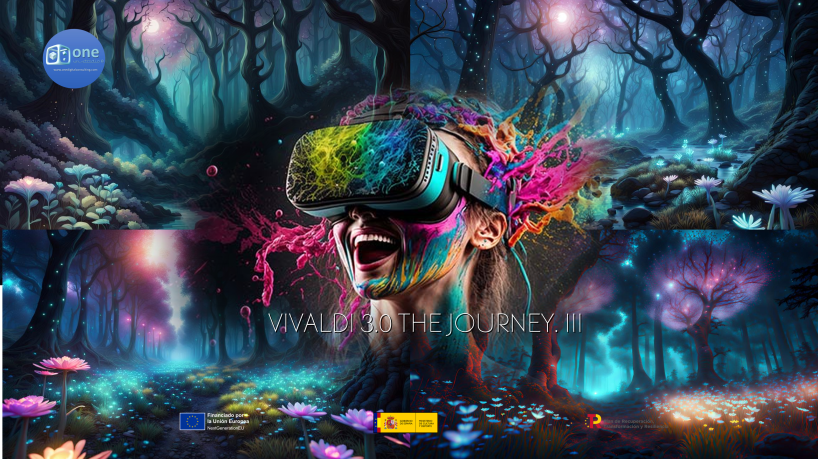
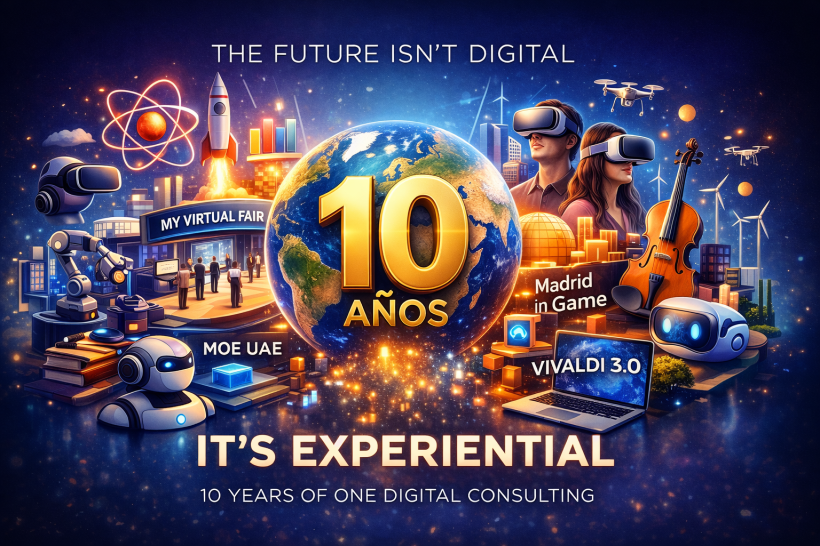
VIVALDI 3.0 THE JOURNEY. III

“Journey Through the Immersive Universe of Four Seasons” is an interactive xr experience that immerses viewers into the realm of Antonio Vivaldi’s musical masterpieces. Through visually compelling storytelling, participants will delve into Vivaldi’s creative journey as he breathes life into his renowned concerto “The Four Seasons.” Each season unfolds in a distinct and captivating environment, seamlessly blending natural elements and music to deliver a multisensory and enchanting encounter.

Journey Through the Immersive Universe of Four Seasons” is an interactive xr experience that immerses viewers into the realm of Antonio Vivaldi’s musical masterpieces. Through visually compelling storytelling, participants will delve into Vivaldi’s creative journey as he breathes life into his renowned concerto “The Four Seasons.” Each season unfolds in a distinct and captivating environment, seamlessly blending natural elements and music to deliver a multisensory and enchanting encounter.

As artists, musicians, and creatives, we find ourselves at a true crossroads—a junction where making the right choices is neither easy nor singular. Beyond the numerous apparent opportunities before us, we must navigate financial survival and address the sustainability of teams, technicians, and the myriad fellow travelers who render our projects minimally viable and appealing to an ever-changing society hungry for new, distinct, and increasingly participatory experiences.

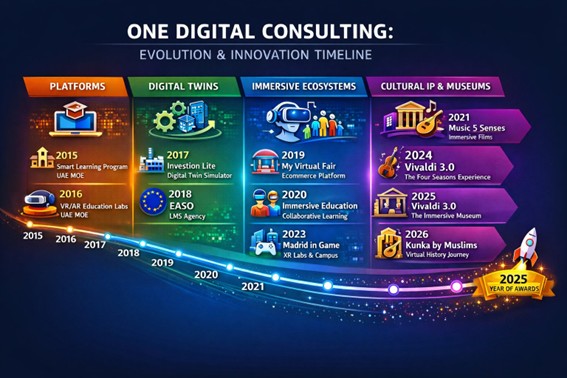
Our journey began over a decade ago with our first forays into immersive 360º recordings, collaborating with artists, musicians, and music classrooms. Here, we began to experiment and learn from the sensations and perceptions conveyed by users, students, and teachers.

One of the pivotal moments in our journey was the first live performance featuring renowned artists like Ouka Leele, where we embarked on an interactive interpretation inspired by the sounds of the Concerto de Aranjuez. It was a fascinating experience, devoid of prior rehearsals or experiential training, executed on a digital stage using Oculus Rift equipment and Tilt Brush from Google, and recorded in 360º stereo with Vuze 360º cameras. This opportunity to recreate Digital Ephemeral Art raised initial doubts regarding feasibility, sustainability, and monetization in more straightforward and economically accessible spaces, as we spared no means or resources for this performance. Crucially, this experience was made possible through the indispensable collaboration of CEVs technical team.

Later on, we delved into the world of reconstructing the virtual museum of the Arab Kunka (Cuenca ancient city)—a collaborative, immersive space within the Frame VR platform. Here, we established a connection between the virtual reconstructions of the Ancient Kunka during the Arab era and the music of the great musician and composer Chema Vílchez, particularly his work “The Land of the Three Cultures”.

As visitors strolled through the ancient Arab fortress, its mosques, baths, buildings, markets, and streets, they were enveloped in the sound of music that transported them to bygone eras, while also being able to explore current spaces through 360º videos. This interconnection between virtual reconstructions, current videos, and music elevated the experience to a higher level, almost teleporting participants to that magical bygone time.

Years later, the Reina Sofia Higher School of Music presented us with a truly intriguing challenge. We were tasked with creating an experience using recordings from a classical music concert to reach students in their educational program who, due to pandemic-related time constraints, were unable to participate in workshops and concerts. This concert was recorded in the Sony auditorium of the school, utilizing 360º 4K cameras and ambisonic microphone technology. The acoustical characteristics of the auditorium are truly exceptional, enabling us to produce recordings of the utmost quality. We utilized Vuze and Zoom equipment, as well as VR devices from Pico, with technological support from HP.

This experience allowed us to craft 12 virtual musical stories centered around artists such as Mozart, Tchaikovsky, and Respighi, where musical compositions intertwined with natural spaces, sensory explosions, and magical worlds, transporting visitors through 12 unique historical narratives. As a result of this endeavor, we developed “Music with the Five Senses,” which was implemented on a Virtual Reality platform and Pico devices, visiting hundreds of schools and educational centers nationwide over the years. Thousands of visitors have immersed themselves in this wonderful and experiential world, making it a true milestone and international benchmark as an immersive educational project centered around classical music.

The next stop on this journey is Vivaldi 3.0. The Journey to the Universe of Antonio Vivaldi and the Four Seasons, led by Ara Malikian and the Camerata of the Reina Sofia School, has been a mystical experience, with a predetermined start date and script, and a long journey through the forests of magical seasonal music. Along the way, we’ve encountered numerous passages and experiences that ultimately culminated in an absolutely magical work. This journey, based on Vivaldi’s original sonnets, reinterpreted by a team of writers and Ara himself, allowed us to rediscover the connections between music, nature, and the cycle of life. Throughout this process, we’ve painted on a virtual canvas, initially blurry passages gradually taking shape into a metaphorical interpretive tableau. Throughout this process, we’ve immersed ourselves in music and creativity, repeatedly playing with the tools offered by generative artificial intelligence, which helped us reinterpret passages and scenarios through Vivaldi’s sonnets and words, Ara’s interpretations, and our own way of composing this tableau, ultimately giving it a cohesive and coherent form. We aimed for it to be timeless, appealing to various types of audiences, inviting them to return to a childlike state and be carried away by the creative spirit of the compositions and the intersection with the cycle of life, both human and natural. And all this, with a commitment to sustainability, balance, equality, and educational vision through values inspired by the emotions and sensations we’ve gathered in the project. This is our way of contributing to the awareness of the need to accelerate societal transformation.

The first test to visualize the outcome of this initial step of the project was the concert held on January 29th at the Sony auditorium of the Reina Sofia School. It was a real trial by fire, where we had to present this new proposal for an interactive multimedia concert live to a select audience: students and teachers from various schools in the Community of Madrid. It was a multimedia experience where interactivity through monitors and screens, interactions among musicians on stage, Ara Malikian’s performance, his introductory messages for each movement, and images, passages, and videos related to the movements were put to the test.

More than 600 students from a dozen public and private schools in the Community of Madrid, accompanied by their teachers in two sessions, were able to enjoy this experiential session, with an extremely high level of satisfaction. And all this was made possible thanks to the perfect coordination between the ONE team and the production, audio, and video team of the School. We had top-of-the-line equipment and professionals of the highest caliber. The journey has only just begun, and this experience has allowed us to analyze and evaluate the initial results, and to envision how we can continue advancing and projecting new immersive experiences in the immediate future. We aim to enhance the experience by integrating 3D multimedia elements more extensively, as well as enhancing the pre- and post-concert experience.

Welcome to the interactive immersive world of Vivaldi 3.0. Step into a space where reality merges with imagination, where every corner is filled with magic, and music awaits you at every turn. As you enter the world of the four seasons, you’ll find yourself surrounded by vibrant landscapes pulsating with energy and creativity. Feel the thrill of immersing yourself in a world where the boundaries of reality blur, and your senses awaken like never before. Interact with the environment around you: touch, explore, listen, and engage with the elements inhabiting this fascinating world. Whether you get lost in enchanted forests or dive into the depths of the unknown, each experience is yours to discover and shape. Prepare to be captivated by the sights, sounds, and sensations enveloping you as you delve deeper into this immersive universe throughout the cycle of life.

So, welcome to a world where dreams come to life, and the extraordinary awaits you around every corner! Let your curiosity guide you as you embark on an exciting and unforgettable journey through the Interactive Immersive Universe of Vivaldi’s Four Seasons.

Here are some figures reflecting and highlighting the extraordinary effort involved in this journey: An experience recorded and produced in 6 months, many locations, involving more than 50 professionals and over 4,000 hours of work, recording 4 live concerts with the attendance of over 1,000 people (students & teachers) from 20 schools. An immersive experience available on VR devices and the Web XR immersive platform, featuring 4 spaces, or “stations,” with interactive games, integration of 3D volumetrics, hundreds of photographic images, 10 hours of concert recordings in 8k, several terabytes of video and sound files, hundreds of hours of processing and post-production, hundreds of hours of editing and format integration…hundreds of images generated by AI to create virtual spaces and environments, artificial intelligence and image processing, 8K 360º cameras, ambisonic sound, creation of countless 3D assets

8K Enables Immersive Vivaldi 3.0 Project

By Bob Raikes

…and this is just one of the stops on this magical and unique journey.

Carlos J. Ochoa Fernández ©

Metaverse is ready for Education

Over the course of the past two decades, I have been fortunate enough to engage in groundbreaking initiatives within the realm of digital transformation in education. Today, as we grapple with contrasting viewpoints on whether the #Metaverse holds promise as an educational tool or is merely a rehashed concept, I wish to offer my insights on the matter.

“A Reflection on Virtual Worlds and Their Contribution to Education”

Over the course of the past two decades, I have been fortunate enough to engage in groundbreaking initiatives within the realm of digital transformation in education. Today, as we grapple with contrasting viewpoints on whether the #Metaverse holds promise as an educational tool or is merely a rehashed concept, I wish to offer my insights on the matter.

To me, the #Metaverse embodies a realm where Time and Space engage in a game of strategy, akin to a game of chess. Drawing inspiration from Albert Einstein’s musings: A human is an integral part of the cosmos we term the Universe—a fragment confined by time and space. But so what?

The crux of the matter lies here: the interplay between Time and Space.

Metaverse versus Universe, and Human Being versus Avatars—these interactions hinge on the relationship between time and space.

In the spheres of art and music, artists have fashioned #MetaphoricalUniverses or #EphemeralUniverses —spaces and encounters that are unparalleled, transient, experienced in the present, and then fade away.

Virtual Worlds offer us this same potential but with the power to amplify it manifold into new, boundary-defying dimensions. This expansion reaches individuals and groups who might otherwise never have had the chance to connect in such an environment.

The term #Metaverse, though rooted in technological definition, has acquired a mythical aura and has been employed in ways that fail to captivate. Presently, describing or elucidating the societal advantages and opportunities afforded by #ImmersiveTechnologies presents a challenge. This is due to the term’s misappropriation and dilution by entities possessing an insufficient grasp of the profound intricacies and context of the technology at hand.

In 2003, I embarked on a transformative journey that led my past company, eLearning Consulting, to evolve an eLearning platform into a cutting-edge virtual educational platform known as “Edutopia.” This ambitious endeavor marked my foray into the realm of 3D worlds and virtual reality, bridging the gap between schools, educational communities, and innovative technology. Edutopia introduced avatars, interactive games, and an array of tools tailored for teachers, students, collaboration, monitoring, and evaluation—accessible from any PC.

My dedication bore fruit as thousands of students in Spain gained free access to this groundbreaking platform, supported by funding from the Ministerio de Educación, España.

Over two decades, my commitment to innovation in education extended to active involvement in classroom innovation programs and collaborations with prominent publishers. This commitment also manifested through investments in Research and Development programs under the aegis of the European Commission, resulting in the realization of several globally renowned projects.

In 2013, my endeavors expanded beyond education as we developed pioneering simulators and digital twins for the industrial sector. Subsequently, in 2017, I launched the #SmartEducationLabs initiative for the Ministry of Education in the United Arab Emirates (UAE). This groundbreaking project championed advanced education and the digital transformation of classrooms.

This legacy persisted through 2022-23, marked by my instrumental role in establishing Advanced Labs and a Virtual Campus for Madrid’s gaming industry. This Virtual Campus is uniquely focused on nurturing entrepreneurial skills within the realm of video games and immersive experiences, ultimately fostering innovation within the gaming sector.

If you want to know more, please visit #MetaMinutes with my friend Rene Schulte here: https://lnkd.in/d5WXRf3P

If you want to know more about #SmartEducationLabs, visit
https://lnkd.in/dZciTDGa

Carlos J. Ochoa Fernández ©

La Frágil Levedad del SER

Muerto el #Metaverso, larga vida a la #AI o #ChapGPT,  debiera decir?

En este mundo tan frágil, efímero e inconsistente en el que vivimos últimamente, resulta muy preocupante la fragilidad de los argumentos que soportan grandes decisiones de la vida diaria.

El duro mundo del influencer, del bloguero, del metaversado, en busca de la última novedad, o al menos así lo piensan ellos, los lleva a ensalzar ídolos y convertirlos en villanos en apenas unos meses. El poder del marketing, y su influencia en tomas de decisiones rápidas, en aquellos que actúan sin pensar (proactivos dicen ellos, desinformados, pienso yo) es realmente brutal. El numero de impactos en este breve espacio de tiempo, supera con creces las expectativas que se podría alcanzar por cualquier otro medio. Una caza sin piedad de desinformados, ignorantes habidos de ser, sin ser.

Nuevas generaciones que buscan respuestas rápidas a problemas complejos, sin importarles la consistencia ni la transcendencia de las decisiones o el alcance de estas.

¿Resultado? lo tenemos a la vista. El presente se nos cruza y abofetea cada día con temas tan trascendentes y relevantes como la canción de Shakira y las historias de Pique. Algo que no se produce como fruto de la casualidad, o ¿ piensas que si?.

Hoy a nadie le extraña que escritores, blogueros o revistas técnicas internacionales, lleven haciendo trampas con sus artículos firmados, y elaborados por una máquina. Por no hablar de grandes ídolos musicales de un solo tema, elaborados íntegramente por ordenador.

El nuevo “Tsunami” golpea nuestras desoladas costas de la educación. Aparecen nuevas voces en el horizonte, cantos de sirena, intentando convencernos de los milagros de la Inteligenia Artificial” y los chats inteligentes, bla, bla, bla.

En 1988, durante mi etapa de formación en la Escuela de Informática de Siemens en Alemania, llegó a mis manos un libro verdaderamente apasionante: Sistemas Expertos, editado por Siemens y Dieter Nebendahl. Se convirtió en mi libro de cabecera durante algún tiempo y apoyó los desarrollos que llevamos a cabo en los días de los Sistemas de Información Geográfica.

A lo largo de los últimos 5 años, como Co-Chair del Comité de Educación de la Asociación (VRARA), hemos venido realizando una incesante labor de sensibilización, liderazgo y colaboración, con instituciones de primer nivel, en el estudio de implementación de metodologías, tecnologías inmersivas en la educación, tratando de avanzar en el desarrollo de un nuevo ecosistema educativo.

Humildemente creo que, en muchas ocasiones nos hemos anticipado a los tiempos, elaborando trabajos y estudios: El estudio de la VR/AR en Educación, Immersive Learning, Adcanced Simulations, Virtual Worlds and Metaeducation, Augmented Education for Augmented Soceity

A lo largo de la interesante sesión de la semana pasada “Are we ready for #AI in #Education”, se pusieron de manifiesto por un importante panel de expertos internacionales, algunos puntos esenciales, como que uno de los propósitos centrales de la educación es desarrollar pensadores críticos. También que la educación se ve comprometida cuando tratamos de impartirla a grupos grandes. Y cuando la discusión se lleva a grupos pequeños es donde se logra el verdadero aprendizaje. Otro de los problemas que se pusieron encima de la mesa, es que estemos demasiado centrados en hacer trampa en algunos aspectos del desarrollo de nuestras habilidades, lo cual nos puede llevar a un triste escenario de futuros lideres, en donde la sociedad en su conjunto puede verse afectada. ¿Como vamos a permitirnos esta falta de integridad académica y su transcendencia en el desarrollo de los futuros lideres de esta sociedad?.

Es necesario poner el foco en incorporar el pensamiento crítico y el pensamiento basado en la aplicación en el sistema educativo con mayor peso, en lugar de escribir la información aprendida a través de libros (digital/papel) a los que se les puede dar un peso más bajo. En la actualidad podemos decir sin lugar a duda, que la perspectiva desde el punto de vista de los estudiantes, justo la opuesta.

Esto es, “Augmented Education” es un salto cualitativo, en donde metodologías y tecnologías inmersivas en entornos disruptivos, nos hacen visualizar y definir un espacio de educación y formación más práctica, colaborativa, avanzado, adaptado a las necesidades de la sociedad actual y futura. Centrándose en algo más práctico, innovador, basado en experiencias, trabajo colaborativo, etc… algo que está en el polo opuesto a la formación tradicional basada en la lectura, el aprendizaje escrito, etc…

Hace ya seis años, con motivo del congreso internacional #Expolearning, tuve la oportunidad de presentar: La rebelión de las máquinas y la formación disruptiva. Una visión futuristica de la Educación Inmersiva y Experiencial y su posible evolución…y parece que fué ayer.

Y en menos de tres semanas, es cuando aparece la novedad “para algunos” de herramientas como #ChatGPT. Y creen descubrir el nuevo santo grial, saltando inmediatamente a un nuevo futuro… olvidando todos los paradigmas, visiones y avances realizados en estos últimos años.

En realidad, estamos ante un escenario muy similar al inicio de la Robotica. Cuando empezaron a invadir nuestras vidas hace más de 50 años, con orígenes similares y en muchos casos paralelos a la IA… lástima que la memoria sea frágil, la ignorancia tan atrevida y el marketing de las grandes multinacionales tan potente. Alimentando la maquinaria paralela de los blogueros, que necesitan cada día para sus blogs novedades, noticias únicas, aunque no lo sean, y no se procuren de estudiar las cosas, su evolución, orígenes, etc…baste con copiar y traducir un artículo de una prestigiosa revista americana, y publicarlo como propio, o filtarlo por ChatGPT?.

Gracias a dios, no es el caso de los eruditos mortales, sino de los metaignorantes, que cada vez ocupan más la superficie de este maltratado planeta.

Es curioso ver cómo, año tras año, encaminados hacia la transformación digital en la educación, simuladores inmersivos, trabajo en equipo, herramientas avanzadas, mayor interactividad, realidad aumentada en tiempo real… alejándonos de libros, textos, mensajes literales, y apoyándose en el mundo gráfico e interactivo, y ahora…. we go back again?.

No tengo la bola de cristal, pero los tiempos están cambiando en una dirección, en la que necesitamos mas “Human Touch”, “Etica”, “Honestidad”, “Sentido de Sacrificio, del esfuerzo”, “Sentido Solidario” y “Educación en Valores”.

Estas de acuerdo?…y Tu, que piensas?.

Carlos J. Ochoa Fernández ©

Las Claves para implantar las Tecnologías Inmersivas en la Educación.

Education is a system; teaching is an action; learning is a process. Terry Heick

Regulación y ética para máquinas, un desafío para los humanos
Analizamos el paradigma tecnológico al que se enfrenta el ser humano desde el punto de vista de los profesionales.

Educar, Educar y Educar…

¿Cómo vamos a formar en realidad virtual? La clave está en “educar, educar y educar”. De esta premisa parte Carlos J. Ochoa Fernández , fundador y CEO de ONE Digital Consulting y Co-Chair VRARA Metaverse on Dec 17 Education Committee, quien visitó nuestro auditorio en una de las sesiones del XR Fest.

Educar de forma transversal en nuevas tecnologías y crear documentos dirigidos a los centros educativos que aporten valor y formen al profesorado, es una tarea ardua pero necesaria. El primer paso es analizar el perfil de los profesores. En ocasiones, –comenta Ochoa– “queremos formar a gente o profesionales que son reacios o que no tienen la formación adecuada para luego impartir a los alumnos”.

Desde su organización, proponen un escrito de buenas prácticas donde reflexionan sobre la ayuda que necesitan los colegios, los docentes y los decisores para comprender la tecnología y ver el sentido de su aplicación en los métodos de enseñanza.

Marjorie NETANGE, directora de Desarrollo y Comunicación de la Escuela Superior de Música Reina Sofía, coincide en que “el docente tiene que trabajar su metodología en términos de cómo integrar la tecnología puntualmente”, pero sostiene que parte de su programa debe seguir una línea tradicional.

Según Angeles Heras Caballero, secretaria de Estado de Universidades de Ciencia, Investigación, Desarrollo e Innovación, es necesario orientar a los alumnos de universidades y posgrados hacia un futuro tecnológico. En España, ya se ha puesto en marcha la construcción de un Comité Científico de Ética, pero es imprescindible que estas normas coexistan con el resto de los actores empresariales, asociaciones e incluso, con otros Estados.

Una sesión, presentada y dirigida por Elena González de la Fuente, responsable del Espacio Fundación Telefónica.

Y con la participación de Ian Forrester, responsable del departamento de I+D de la BBC, el R&D Future Experiences, Pedro Lozano Alcolea, fundador y COO de Imascono, Marjorie NETANGE, directora de Desarrollo y Comunicación de la Escuela Superior de Música Reina SofíaCarlos J. Ochoa Fernández, fundador y CEO de ONE Digital Consulting y presidente de la Asociación VRARA Madrid y co-presidente global del Comité de VR Education de VRARA Metaverse on Dec 17, y Gonzalo Ruipérez García, CTO en EstudioFuture.

XRFEST , Fundación Telefónica Junio 2019.

Chronicles from the #RealVerse. The New Age of Technology.

The world as we have created, it is a process of our thinking. It cannot be changed without changing our thinking. Albert Einstein.

In just 12 months, the world has been turned upside down. And all predictive models, analyzes and future scenarios have become obsolete without being able to identify a single true and predictable answer about the immediate future.

Phrases such as transformation, adaptation to change, permanently reinventing oneself, sustainable and safe models, have become a thing of the past. All these definitions require a new mentality, attitude and mental strength far superior to what we were used to living together to face the day to day and think about a future, to some extent, stable.

And for this, we must be able to quickly change our way of thinking, acting and conceiving the world as we have done until now, or we will not be able to survive these new, unpredictable and uncertain scenarios.

Living in a permanent state of alert requires great mental strength, but above all honesty, ethics, networking and handling of truthful information in real time. In order to be able to anticipate unwanted scenarios, with some success.

And unfortunately, all this is what we are missing right now, as a society and as individuals.

It is enough to go outside and take a walk through our cities, fields, hospitals, schools, offices and homes and see how in just a few months, everything has radically changed.

While it is true that technology has invaded every corner and space of our lives. Changing our habits and ways of doing things, of working, of communicating … this change must accelerate and find a new temporary space, where we can significantly improve our quality of life. From communications, to transport, through health and health, science, energy, food, in short, each and every one of the activities that human beings develop in their day-to-day life must be reimagined in some way. way, allowing us to benefit from the efficient use of technologies.

Despite what we think, the planet earth has been inhabited in its greatest historical period by dinosaurs. And in the timeline, the human being has barely lived a hundredth part of it. The stone age lasted 200,000 years, the agricultural age 10,000 years, the industrial age 200 years and barely 60 years the era of high technology.

And it has been in this short period of time that the greatest technological developments have taken place, accompanied by the greatest industrial development on the planet, accompanied by the greatest environmental impact in known history.

The main technological drivers are all exponential, the development of broadband, the greater storage and data processing capacity, the increase in clean power generation plants, development in the world of medicine and telemedicine, have democratized access and benefit of technologies by facilitating and simplifying access and management of them to citizens.

The interrelationships that occur between major trends “Megatrends”and “Innovation” is a fertile field for scientists and developers in which new business models and opportunities must be modeled for the new society of the Post-Covid Era.

But in this new scenario, society has new expectations and demands that it is willing to lead, to guarantee a model of sustainability and well-being sponsored by this technological revolution. Transparency, honesty, veracity, ethics, environmental impact, sociability, sustainability, are some of the values ​​that emerge from the new society.

The British Alan Turin, considered by some the father of artificial intelligence, laid the foundations of what we know today as the “Information Society”, back in the 1930s and 1940s. One of the founders of modern computing, he was capable of programming everything that could be specified by an algorithm. And on the other hand, the American Claude Elwood Shannon, elaborated the bases and the essence of the communication mechanism, defining the concept of “information”, as the foundation and ability to store and transfer data. Almost seventy years later, those basic foundations and incipient beginnings of information and communication technologies have become fundamental elements of our current society and future evolution and development.

We are facing a unique opportunity, albeit in a very complex scenario. Which leads us to take on new challenges with courage, seek creative and innovative solutions, focusing primarily on those aspects that provide the greatest value and in which the capacity for green and sustainable leadership makes a difference to us to continue betting on life in the blue Planet.

Carlos J. Ochoa Fernández ©

#ImmersiveLearning Environments in Disruptive Advanced #Education #Ecosystems. Episode I.

“The world as we have created it is a process of our thinking. It cannot be changed without changing our thinking.” Albert Einstein.

Man is by nature a social animal. From birth, he absolutely needs others to develop physically and socially. Enhancing our intelligence in the face of our physical weakness. We are social creatures by nature and we need to learn how to be part of society, how to interact with groups of people, and how to work as a team. We are emotional, social, rational beings, with conscience and intentionality, will, freedom and personal identity, ethics…

“The world as we have created it is a process of our thinking. It cannot be changed without changing our thinking.” Albert Einstein.

Man is by nature a social animal. From birth, he absolutely needs others to develop physically and socially. Enhancing our intelligence in the face of our physical weakness. We are social creatures by nature and we need to learn how to be part of society, how to interact with groups of people, and how to work as a team. We are emotional, social, rational beings, with conscience and intentionality, will, freedom and personal identity, ethics…

We live in times of complete uncertainty. The world, had never faced a similar situation as we have today. Where there are too many questions in the air, still waiting for the correct answer, if there are any.

During this last months, I have got the perception that we were trying to hide ourselves into an increasingly virtualized world, behind decomposed avatars, robots or new small particles into a new virtual scenario as part of this new reality. Losing the control of our free brain activity, dominated for external unknown forces, as part of a live experiment drive by some kind of superior intelligence. But with some common feelings…the lack of affection, recognition, and human touch.

In this new world, governments face heedlessly to the new academic year, terrified of a new outbreak that will leave the system naked again, yes, let’s contribute something earthly. Let’s say things by their name, since, after several months of uncertainty, the capacity to anticipate, prepare for this new scenario has been nil and we continue to learn from the mistakes of the recent past.

There are no longer shortcuts, online paths traveled by elements devoid of the minimum preparation to face these new challenges in today’s society.

Today I lost my avatar, and I believe that there is only one possible path, towards the digital transformation in Education, from a completely disruptive and non-evolutionary approach. Since there is no time for it and these generations will not allow it.

Do we want to be remembered as responsible? Or guilty?

Episode I

Why do we want, need Immersive Learning Environments? Is it a new fad? is it a trend in education? does it really add value? is there proven evidence? Not it is not new, but what do we want it for.

  • Create immersive spaces in the image and likeness of real existing classroom spaces, but that adapt to different subjects.? Where classes are taught with immersive Caves / HDMI devices, etc.
  • Create a universal space, accessible by the entire educational community, both inside and outside the classroom, where to share experiences, activities, projects … etc.
  • Develop a learning methodology, where virtual spaces are recreated, with scenes adapted to the contexts and where students actively participate as members of the group. Customizing to your image and likeness? Future open worlds? Contributing your vision of the new virtual classroom?
  • Turn the classroom into an inspiring experience, each and every day of the year.? Are we ready for it?
  • Convert the workshops into creative, interactive and inspiring spaces, where students learn from good practices and develop their skills beyond their limitations?
  • Create multiverse spaces, where futuristic experiences are created, anticipating solutions to the world of the future? From the lessons learned from the past and through the use of new technologies? What would have become of … if we had acted …?
  • Imagine spaces that are transformed and adapted depending on the needs, the context, the problem … simulating unforeseen situations and seeing how the students react.
  • Learn from the silence, the stones, the walls, the art of the works hidden in the walls of history and understand the reason for the evolution of things, the need and the use of inventions … in contexts adapted to time.,

to be continue…

Have a nice and safe day.

Carlos J. Ochoa Fernández ©