Reimagining Musical Experiences: The Story of Vivaldi 3.0 XR

Built on this foundation, “Vivaldi 3.0 VR” aims to offer a multisensory journey linking music with nature, sustainability, and the collaborative spirit of the next generation. Participants are invited not just to listen but to explore the profound relationship between “Vivaldi’s The Four Seasons” and the natural world, connecting music with emotion, storytelling, and an urgent call for environmental awareness.

The Story Behind the Seasons: Why Classical Music?

Built on this foundation, “Vivaldi 3.0 VR” aims to offer a multisensory journey linking music with nature, sustainability, and the collaborative spirit of the next generation. Participants are invited not just to listen but to explore the profound relationship between “Vivaldi’s The Four Seasons” and the natural world, connecting music with emotion, storytelling, and an urgent call for environmental awareness.

It may seem unusual to focus on classical music, yet through years of immersive experimentation, we’ve discovered that classical music epitomizes the very definition of universal sense. It transcends repetitive melodies and trivial lyrics, speaking directly to the soul as a universal language.

Classical music has the unique ability to inspire and transport us to spaces where nature, mind, and music coexist harmoniously—no prior knowledge of the composition or composer is required. It weaves stories rich in life, emotion, and feeling.

Did you know that Vivaldi’s The Four Seasons is one of the most listened-to pieces in the history of music worldwide?

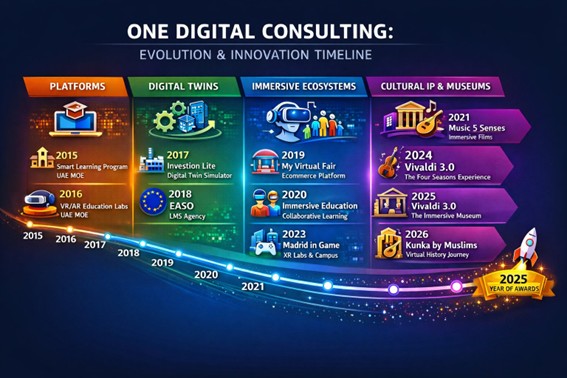
With Vivaldi 3.0 VR, we took a leap into uncharted territory—reimagining the timeless beauty of Vivaldi’s music by merging it with cutting-edge virtual reality technology. This journey began four years ago during the pandemic, in collaboration with the Reina Sofia High School of Music. Together, we ventured into immersive storytelling, Music with Five Senses using the works of composers such as Tchaikovsky, Mozart, and Respighi as a foundation.

We produced 360º recordings of live performances featuring ambisonic sound and paired them with nature-inspired narratives. These 14 immersive 360º stories from “Music with five Senses, all tied together by the tale of a “luthier crafting a violin”—from forest wood to the workshop—have since been experienced by over 10,000 students across Spain and Latin America, achieving a satisfaction rate exceeding 90%. This overwhelming response highlighted the transformative impact of immersive musical experiences on education and emotional connection, inspiring us to continue exploring this innovative approach.

Our Vision

Built on this foundation, Vivaldi 3.0 VR aims to offer a multisensory journey linking music with nature, sustainability, and the collaborative spirit of the next generation. Participants are invited not just to listen but to explore the profound relationship between Vivaldi’s The Four Seasons” and the natural world, connecting music with emotion, storytelling, and an urgent call for environmental awareness.

Bringing the Project to Life

This project has been a collective journey, born of collaboration between musicians, XR developers, sound engineers, and designers. We conducted rehearsals and recordings with the orchestra, including live and closed-door sessions featuring “Ara Malikian, ensuring sound quality at the Sony Theater of the Reina Sofia School of Music was exceptional.

To bring this vision to life, we hosted two hybrid immersive concerts where virtual projections overlapped with live orchestral performances. Ara Malikian’s virtual presence added context and depth, introducing each piece. Feedback from school audiences in Madrid was extraordinary, reaffirming the potential of immersive music experiences.

With the launch of the “300th-anniversary program for Vivaldi” in January, we are poised to expand the reach of this project globally, fostering a sense of shared responsibility and deep appreciation for both art and the planet.

Reimagining Musical Experiences: Challenging Traditional Approaches

Breaking Traditions

Classical music often feels confined to concert halls and traditional formats. Vivaldi 3.0 VR shatters these barriers, placing participants at the heart of an interactive narrative. It transitions from passive observation to active discovery and interaction, connecting art with pressing global themes like sustainability and collaboration.

Impact on participants

Emotional Resonance: Visual narratives and immersive interaction create profound emotional connections.

Expanded Appreciation: Audiences, especially younger ones, develop a deeper understanding and love for classical music.

Nature Connection: Visualizing seasons and integrating natural elements inspires reflection on humanity’s relationship with the environment.

Collaboration and Community: Shared artistic experiences highlight the power of creativity to unite people.

Technology and Accessibility: Expanding Reach

Immersive technologies like virtual reality democratize access to classical music by removing barriers of location, cost, and traditional concert settings. Today, more than 10,000 students have already experienced this blend of art and technology, proving its potential to bridge gaps and inspire new audiences.

Engaging Younger Audiences

Dynamic Interaction: Gamified and exploratory VR elements make classical music engaging for tech-savvy youth.

Visual Narratives: Stunning visuals and interactive environments resonate deeply with digital natives.

Relevance to Global Themes: Sustainability and environmental consciousness make the experience meaningful to the next generation.

Global Impact: The upcoming 300th-anniversary program will further amplify the global influence of Vivaldi 3.0 VR, using technology to bridge art and sustainability while fostering collaboration for a brighter future.

Music and Immersion: Enriching the Metaverse

Cultural Diversity Through Music: Music serves as a universal language, and immersive experiences magnify its ability to bridge cultures. Within the metaverse, these experiences can showcase diverse musical traditions, fostering appreciation and understanding across global audiences.

Stories That Connect: Narrative is the key to making the metaverse culturally rich and engaging. Drawing inspiration from pioneers like Pink Floyd, Genesis, who combined sound and imagery to tell impactful stories, immersive music can leverage XR technology to create captivating narratives.

The Role of Technology: Immersive music experiences enable users to step into performances, not as spectators but as protagonists. Spatial sound, real-time collaboration, and AI-driven personalization make the metaverse a unique canvas for artists to connect with audiences in transformative ways.

The future is now—let imagination flourish, adorned with magic and poetry, to craft a new era of immersive storytelling.

Acknowledgments

I want to extend my heartfelt gratitude to everyone who made this project possible. A special thanks to Ara Malikian, an exceptional musician and an incredible person, to the musicians and technical team at the Reina Sofia School of Music, to the entire team at ONEXRStudio, and to our partners and collaborators: Andy Fidel, Cause + Christi, Encarna Mora, Pico, and HP.

Advanced XR Project Development: A Comprehensive Guide

In the digital age, high-quality content is essential for engaging and retaining audiences, as well as provide value and resolve problems to real life. It helps build trust, establish authority, and drive traffic. Compelling content can differentiate a brand, provide value to the audience, and foster community engagement.

In the digital age, high-quality content is essential for engaging and retaining audiences, as well as provide value and resolve problems to real life. It helps build trust, establish authority, and drive traffic. Compelling content can differentiate a brand, provide value to the audience, and foster community engagement.

Experience brings things to life, creating immersive and memorable moments that engage the senses and emotions. On the other hand, content touches the heart, the senses and the perception of being there, resonating on a deeper level by conveying stories, ideas, and emotions that connect with the audience. Together, they form a powerful combination: a rich experience that captivates and meaningful content that inspires.

In the development and implementation process of advanced “XR projects, I have had the opportunity to work with highly potential and excellent teams in design and development. However, there are still some barriers that make the design of the solution and the concept require a fundamental effort to have an initial global vision.

This vision should enable us to visualize what we are going to offer our target audience, what we intend for them to feel, do, play, get excited about, or even hate us forever. Playing with emotions is something magical that requires constant feedback and user testing. But if there’s something fundamental to capturing the sensations and emotions of the user, it is designing a captivating and immersive user journey. This is one of the key elements for success when tackling a complex immersive project.

Then, we have the earthlier, yet no less complex, problems: the technologies to apply, data and information formats, their integration, functionality, programming, and the means or devices where the experiences will be developed and enjoyed. These are just a few pieces of the puzzle that requires a very detailed and well-crafted workflow to achieve the objectives we set at the beginning.

One of the fundamental parts of the initial design is considering the types of content and context we will create and how we can reuse them in the future. Creating these assets, videos, animations, and volumetric captures is extremely costly, and their integration and reuse will allow us to ensure continuity for the project or its future developments. This is often forgotten. While it’s true that it’s not an easy task, if we approach it well, we will achieve significant savings and benefits in the future.

Creating the most innovative and advanced XR (Extended Reality) experiences requires pushing the boundaries of technology and creativity.

Let me share with you some insights an in-depth guide to achieving this:

a. Conceptualization and Planning.

   – Innovative Vision: Aim for a unique concept that leverages the latest XR trends and technologies. Consider incorporating AI, machine learning, and real-time data integration.

   – Comprehensive Objectives: Define sophisticated goals, such as hyper-realistic simulations, complex interactive storytelling, or groundbreaking educational tools.

   – Advanced Target Audience Analysis: Conduct deep research on your audience to understand their technological adeptness, preferences, and potential use cases.

b. Design phase.

   –  Advanced Storyboarding and Scripting: Use detailed storyboards with advanced techniques like branching narratives and non-linear storytelling. Ensure scripts accommodate complex interactions and AI-driven content.

   –  Cutting-edge UX/UI Design: Design intuitive and immersive interfaces with advanced interactions like eye-tracking and gesture controls. Utilize user experience testing tools like heatmaps and biometric feedback.

   – High-Fidelity Art and Asset Creation: Create hyper-realistic 3D models, textures, and animations using advanced tools like Substance Painter, ZBrush, and photogrammetry. Consider procedural content generation for dynamic environments.

c. Development phase.

   –  State-of-the-Art Platforms: Choose platforms that support the latest XR innovations. Unity and Unreal Engine are industry standards, with Unreal Engine being particularly powerful for photorealistic graphics.

   – Innovative Interaction Models: Implement advanced interaction models such as hand-tracking, eye-tracking, and haptic feedback using technologies like Leap Motion, Tobii Eye Tracking, and haptic devices.

   – Programming and Scripting: Develop complex behaviors and interactions using advanced scripting languages and frameworks. Unity uses C# while Unreal Engine uses C++ and Blueprints for visual scripting.

   – AI and Machine Learning Integration: Leverage AI for adaptive learning experiences, dynamic content generation, and personalized user interactions. TensorFlow and PyTorch can be integrated for machine learning capabilities.

d. Q&A, Testing and Iteration.

   – Comprehensive Testing: Conduct rigorous testing across various devices and environments. Use advanced debugging tools and performance profiling to ensure seamless experiences.

   –  Beta Testing with Advanced Analytics: Use beta testing phases with detailed analytics to gather data on user interactions, preferences, and technical performance.

   – Continuous Improvement: Implement feedback loops with real-time updates and continuous integration/continuous deployment (CI/CD) pipelines. Use, standard tools for collaboration and fast operation, Teams is a very powerful tool..

e. Delivery.

   – Optimized Packaging: Optimize the final build for performance across different platforms, including VR headsets, AR glasses, PC, tablets and mobile devices. Use asset streaming and level-of-detail (LOD) techniques for performance optimization.

   – Advanced Deployment: Utilize cloud-based distribution platforms for real-time updates and content delivery networks (CDNs) to ensure fast, global access.

   – Post-Launch Support: Provide ongoing support and updates. Implement advanced monitoring and analytics to track performance and user engagement.

Tools and Technologies

–  Development Engines: Unity, Unreal Engine

–  3D Modeling Software: Blender, Maya, 3ds Max, ZBrush

–  Texturing and Painting: Substance Painter, Quixel Mixer

–  AI and Machine Learning: TensorFlow, PyTorch

–  Performance Optimization: NVIDIA Nsight, Intel GPA

–  Collaboration Tools: Jira, Confluence, Slack, Teams

–  Testing Tools: Oculus Debug Tool, SteamVR Performance Test, Pico Deb

–  Video Production: Adobe Premier, Final Cut, DaVinci Resolve

–  Video 360º: Canon, Insta, Kandao

–  Ambisonic sound: Zoom, Sennheiser

Best Practices

–  Pushing Visual Fidelity: Utilize high-resolution textures, advanced lighting (like ray tracing), and realistic physics to create stunning visuals.

Innovative Interactions: Implement and experiment with the latest interaction methods, ensuring they add value and enhance immersion.

–  Scalability and Flexibility: Design your XR experiences to be scalable and adaptable to different platforms and future technologies.

–  User-Centered Design: Keep the user at the center of the design process, ensuring that advanced features enhance rather than complicate the user experience.

–  Ethical AI Use: Ensure that AI and machine learning applications respect user privacy and data security.

I do not intend to give a master class in XR content design and development with this, but rather a simple support guide, which we will develop in more depth based on years of industry experience.

By combining cutting-edge technology, innovative design, and rigorous development processes, you can create advanced and immersive XR experiences that stand out in the rapidly evolving XR landscape.

Carlos J. Ochoa Fernández ©

The Future of Immersive Technologies is to focus on the Value Chain

In times of uncertainty, investments must be accompanied by calm reflection when selecting our travel partners and not just service or product providers.

Today I want to invite you on a journey from the origins of interactive graphics systems to the world of the metaverse with my friend Marlon Molina.

I want to share with all of you the recent interview that the prestigious Computerworld University conducted with me through an old fellow traveler from the early days of Geographic Information Systems, Marlon Molina.

This a unique and passionate opportunity, in which we remember our steps and experiences in the graphic industry, for more than 30 years, Marlon at Intergraph and I at Siemens.

A time in which we feel like authentic active pioneers, and with the luck of being able to share these experiences with the new generations of enthusiasts of the interactive graphic world.

After a brief and charming conversation about the origins of digital image processing, the leadership of Silicon Graphics workstations (all major film productions used this technology, animation and simulation studios, etc…) and its disappearance by complete at present. Coming to the conclusion that the evolution of technology in recent years, leaves us with lights and shadows uncovered, which are repeated today and against which we must remain on guard.

In times of uncertainty, investments must be accompanied by calm reflection when selecting our travel partners and not just service or product providers.

After this brief review of the history of the interactive graphic world, we take a tour of the current state of immersive technologies, #virtual reality, #augmented reality, #Immersive experiences, the #Metaverse, and the new Vision from ONE Digital Consulting.

And one of the first reflections that come to mind is the insistence of the big manufacturers in selling us a wonderful, virtual and better world, without asking me if I am interested, if I like it, or if I simply prefer to solve the problems of this world. from my freedom, intelligence, and personal decision.

Join me in this conversation, only for fans of advanced technologies and their application to real industry. I hope you enjoy it as much as we did during the interview. I am looking forward to hearing your comments.

https://www.computerworlduniversity.es/tendencias/concentrarse-en-la-cadena-de-valor-es-la-clave-para-el-exito-de-la-realidad-virtual-y-aumentada

Have a great and wonderful day.

Carlos J. Ochoa Fernández ©

Building the Big Forest

I would love to share a very inspirational and personal conversation with Yoshi Garnica, from Impact Revolution.

Disreality is a fantasy journey into the human psyche that takes you on a ride through the twists and turns of that blurred line between what is real and what isn’t. Along the past recent years, let´s defined it as a hybrid experience, I have been walking around the universe of senses, emotions, arts, and social interaction in virtual worlds, as a real opportunity to build a free, democratic, and more sustainable world.

Nowadays, I am truly convinced that we need to act NOW. Tomorrow is too late.

All these reflections come to my mind during the several interviews, sessions, and talks with very good friends of the XR Community. I must say, thanks to all of you, for allowing me to walk along with you and learn together on these “long and winding road of immersive technologies”.

You can watch the complete interview here:

Key insights from the interview:

✳ He is living now in a privileged place: Guadarrama Natural Park – https://bit.ly/3dDukjB

✳ Happiest moment in Life: When he becomes a dad – holding his kids.

✳Last Impact Message to the world: “Build a big forest” – Metaphor to build a “big community” as a base for sustainability growth.

✳ The Education system is hard to Change.

✳Blade Runner 2049 (https://bit.ly/3A1Z5WQ is an example that VR did not change that much since 2017.

✳Experience with building Smart Education Labs with VR

✳Important to increase Accessibility of Technology to poorer countries – Reminded me to our last interview with Alfredo Serrano 🙏

✳Favorite professional project: “Music with 5 senses” – Virtual Concerts to CONNECT:

Arts 🔗 Creativity 🔗 Values 🔗 Nature🔗 Citizens

✳VR could help the Coaching Industry facilitate Engagement, Empathy, and Connection. Important the Environment, Story, and Technology used (for interaction). OpenBCI uses Neuroscience with VR.

✳Last Impactful message to Startups and Entrepreneurs ❤: Unique vision, Build Trust, Work a lot, Value Time, Strong Team, Good mentors, Create a Business Plan (importance of performing a Market Analysis, know your competitors!)

Was a great interview Carlos – Many thanks for sharing your valuable time with us. It’s much appreciated.

Best of luck in Revolutionizing the Education System!

All your thoughts and comments are very welcome.

Have a great time.

Carlos J. Ochoa Fernandez

Carlos J. Ochoa “un guiño a la Educación”

“Apostando fuertemente por un nuevo modelo educativo, ilusionante, empático, inclusivo, democrático y sostenible

Presidente VR/AR Madrid Chapter, Co_Chair del Comité de Educación y miembro fundador de Immersive Learning Association, ICICLE X-Reality for Learning and Performance Augmentation SIG. También es fundador y CEO de ONE Digital Consulting, así como autor del Libro Blanco “Best Practices of VR in Education”.

Entrevista realizada por Sonsoles Gallego para Miranos y Unete 2019

Ayer

Empezamos por su infancia, por conocer a ese niño que todos llevamos dentro.

¿Cómo fue su etapa de estudiante?

Recuerdo mi etapa de estudiante como una sucesión de historias emocionantes, irrepetibles y únicas. Años en los que descubres todo con emoción, ilusión y sorpresa. A pesar de ser tiempos difíciles, como fueron los años de la transición, también fueron una oportunidad única para descubrir el valor de las cosas, la necesidad permanente de aprender y establecer amistades con fuerte arraigo que siguen conmigo hasta el día de hoy.
¿Qué recuerdas de ella?

Tuve la inmensa suerte de comenzar el bachiller en el Instituto Ramiro de Maeztu, en la antigua residencia de estudiantes. Un espacio privilegiado, con profesores muy buenos y compañeros extraordinarios. Allí fueron mis comienzos obligados en el baloncesto “Estudiantes” y en la música (otra de mis grandes pasiones), el arte y el cine fórum…en fin. Allí se fue perfilando mi personalidad y algunas de mis aficiones. Tiempos de desarrollo personal, aficiones y bocatas de mejillones…en la Cantina. Y por cierto, íbamos al “insti” en tranvía, el 27, en donde nos colábamos todos los días…)
¿Algún profesor especial?

Bueno, me vienen varios a la memoria. En especial el Sr. Cebada, profesor de matemáticas (una persona entrañable y gran fan del Rock de los 70) y con el que entablé muy buena relación a lo largo de los años. La Sra. Burgos de geografía, historia y arte y que, por casualidades de la vida, coincidí en Siemens con su hijo como compañero de trabajo por varios años. De la Universidad guardo extraordinarios recuerdos de profesores y posteriormente compañeros y amigos. Algunos de aquellos me ayudaron a centrarme profesionalmente y encarar una nueva fase de mi vida con gran vocación disfrutando inmensamente. Recuerdo emocionadamente las clases de Astronomía y Geodesia, las de Fotogrametría y Teledetección, las observaciones a los astros desde la terraza del Instituto Geográfico Nacional… 

¿Cómo fueron sus inicios en la innovación, la realidad virtual y aumentada?

Mi primer gran reto fue en mis inicios profesionales en la Ingeniería, trabajando en Typsa y participando en los años 80 en proyectos de Cartografía Digital, con los primeros ordenadores de Floppy Disk, pantallas graficas Tektronics, los primeros ploters…etc. En Siemens estuve formándome en IT y Geosistemas de Información en Alemania, incorporando la simulación a los proyectos de Ingeniería Avanzada, en los años 90. Y posteriormente en Eptron comenzamos con proyectos de I&D en Realidad Virtual, desarrollo de los primeros navegadores virtuales educacionales y contenidos digitales para el Aula. Esta etapa la recuerdo como la época de Jurasic Park, y las estaciones de trabajo Silicon Graphics. Éramos realmente unos adelantados a nuestro tiempo, en los inicios del nuevo siglo. En 2015 comienzo este nuevo proyecto profesional y me incorporo a la Asociación de VR/AR y el Comité de Educación. A lo largo de estos últimos años, he estado participando en distintos proyectos nacionales e internacionales de VR/AR en la Educación, la Formación y la Ingeniería.

Hoy

Palabra que define su trabajo: Pasión por la innovación.

Proyectos actuales: 

Recientemente he sido seleccionado como experto internacional del iLRN State of XR and Immersive Learning 2019-20. El objetivo fundamental, es crear un Panel de expertos internacionales equilibrado entre líderes académicos y de opinión de la industria, visionarios e innovadores que representen la totalidad del aprendizaje de K-12, a través de la educación superior, el espacio laboral, la comunidad educativa y el aprendizaje permanente.

Así mismo, sigo empujando la iniciativa de “Schools of The Future” que contaré más detalladamente en el Congreso.

Mañana

Haz un guiño a la educación:

Apostando fuertemente por un nuevo modelo Educativo, “Ilusionante, Empático, Inclusivo, Democrático y Sostenible”, capaz de liderar la Transformación Digital, Innovando eficientemente y eliminando barreras de todo tipo.

Especial ponente en el II Congreso de Influencers Educativos

Breve resumen de su Ponencia en el II Congreso de Influencers Educativos:
“Espacios y Experiencias Inmersivas en Educación 4.0”. Las nuevas tecnologías son aplicadas cada día en la industria y nuevos modelos emergentes, que crean importantes oportunidades de empleo y posibilidades de desarrollo empresarial. De acuerdo con las proyecciones establecidas por la Comisión Europea recientemente, la demanda del mercado en especialistas calificados en tecnología de la información y las comunicaciones (TIC) no se cubrirán, ya que en 2020 habrá un déficit de alrededor de 500,000 profesionales de las TIC. Siendo los profesionales de realidad virtual y aumentada los que se encuentran entre aquellos más solicitados en el sector de las TIC.

Es en este contexto vamos a desarrollar un Taller sobre “Formación de Profesores” en las habilidades relevantes para la formación en el aula, la formación y capacitación para el empleo y el desarrollo del espíritu empresarial basado en estas tecnologías.

Entrevista realizada por Sonsoles Gallego.

Humanos Virtuales en el #Metaverso. ¿Y ahora que?

Fija tu rumbo a una estrella y podrás navegar a través de cualquier tormenta. Leonardo Da Vinci.

Humanos Virtuales en el #Metaverse. Congreso Digital Enterprise Show en #Madrid. Parece que, en los últimos meses, y en particular, desde que Mark Zuckerberg lanzó su proclama sobre Meta, ya todo se ha vuelto Meta-Verso. Y algo más que una metáfora, es una nueva dimensión a un mundo paralelo y finito, y que aún hoy, tiene muchos laberintos por desentramar…¿Estamos listos para ello?

El pasado mes de mayo tuve el inmenso placer de presentar estas reflexiones previas en torno a los Meta-humanos, en el Panel de VRARA del Congreso DES celebrado en Madrid y aquí os dejo el video de la presentación.

https://youtu.be/1QGRvcQiWqE

Desde ONE Digital Consulting, llevamos años desarrollando e implantando plataformas virtuales inmersivas para la educación: Talleres, Masterclasses, Formación de Profesores, Proyectos Colaborativos…en donde miles de estudiantes y profesores han participado de esta experiencia, viviéndola de una manera muy innovadora, inspiradora y positiva.

Estas experiencias nos han permitido desarrollar actividades On-Line, en modo síncrono y asíncrono en varios centros y países del mundo. Desde Estados Unidos, a la India, Rusia, Latino América, Europa, España…y contando con los mejores y mas experimentados colaboradores a nivel internacional. Algo inimaginable hace algunos años, hoy marca un punto de inflexión hacia el nuevo paradigma de una Educación Digital, más inclusiva, participativa, colaborativa, inspiradora, igualitaria, limpia y sostenible.

Cualquier comentario, es siempre bienvenido

Carlos J. Ochoa Fernández ©

Chronicles from the #RealVerse. The New Age of Technology.

The world as we have created, it is a process of our thinking. It cannot be changed without changing our thinking. Albert Einstein.

In just 12 months, the world has been turned upside down. And all predictive models, analyzes and future scenarios have become obsolete without being able to identify a single true and predictable answer about the immediate future.

Phrases such as transformation, adaptation to change, permanently reinventing oneself, sustainable and safe models, have become a thing of the past. All these definitions require a new mentality, attitude and mental strength far superior to what we were used to living together to face the day to day and think about a future, to some extent, stable.

And for this, we must be able to quickly change our way of thinking, acting and conceiving the world as we have done until now, or we will not be able to survive these new, unpredictable and uncertain scenarios.

Living in a permanent state of alert requires great mental strength, but above all honesty, ethics, networking and handling of truthful information in real time. In order to be able to anticipate unwanted scenarios, with some success.

And unfortunately, all this is what we are missing right now, as a society and as individuals.

It is enough to go outside and take a walk through our cities, fields, hospitals, schools, offices and homes and see how in just a few months, everything has radically changed.

While it is true that technology has invaded every corner and space of our lives. Changing our habits and ways of doing things, of working, of communicating … this change must accelerate and find a new temporary space, where we can significantly improve our quality of life. From communications, to transport, through health and health, science, energy, food, in short, each and every one of the activities that human beings develop in their day-to-day life must be reimagined in some way. way, allowing us to benefit from the efficient use of technologies.

Despite what we think, the planet earth has been inhabited in its greatest historical period by dinosaurs. And in the timeline, the human being has barely lived a hundredth part of it. The stone age lasted 200,000 years, the agricultural age 10,000 years, the industrial age 200 years and barely 60 years the era of high technology.

And it has been in this short period of time that the greatest technological developments have taken place, accompanied by the greatest industrial development on the planet, accompanied by the greatest environmental impact in known history.

The main technological drivers are all exponential, the development of broadband, the greater storage and data processing capacity, the increase in clean power generation plants, development in the world of medicine and telemedicine, have democratized access and benefit of technologies by facilitating and simplifying access and management of them to citizens.

The interrelationships that occur between major trends “Megatrends”and “Innovation” is a fertile field for scientists and developers in which new business models and opportunities must be modeled for the new society of the Post-Covid Era.

But in this new scenario, society has new expectations and demands that it is willing to lead, to guarantee a model of sustainability and well-being sponsored by this technological revolution. Transparency, honesty, veracity, ethics, environmental impact, sociability, sustainability, are some of the values ​​that emerge from the new society.

The British Alan Turin, considered by some the father of artificial intelligence, laid the foundations of what we know today as the “Information Society”, back in the 1930s and 1940s. One of the founders of modern computing, he was capable of programming everything that could be specified by an algorithm. And on the other hand, the American Claude Elwood Shannon, elaborated the bases and the essence of the communication mechanism, defining the concept of “information”, as the foundation and ability to store and transfer data. Almost seventy years later, those basic foundations and incipient beginnings of information and communication technologies have become fundamental elements of our current society and future evolution and development.

We are facing a unique opportunity, albeit in a very complex scenario. Which leads us to take on new challenges with courage, seek creative and innovative solutions, focusing primarily on those aspects that provide the greatest value and in which the capacity for green and sustainable leadership makes a difference to us to continue betting on life in the blue Planet.

Carlos J. Ochoa Fernández ©

Empowering the teachers of today, for the citizens of the future

Carlos J. Ochoa, Co_Chair VRARA Education Committee. Piacenza (Italy) 24.09.2019

“The true sign of intelligence is not knowledge but imagination” A. Einstein

New technologies are an emerging industry creating employment opportunities and entrepreneurial possibilities. Virtual reality and augmented reality represent incredible areas of opportunity for future job skills. “VR” failed to live up to the wildest promises when the new VR systems launched in 2015. Nevertheless, the number of job postings for “VR and AR” have risen 93% since 2015, with 17% of that growth happening in the past year. 

According to projections set out by the European Commission, market demands for qualified information and communications technology (ICT) specialists will not be met, seeing a shortfall of up to 500,000 ICT professionals in 2020. Virtual and Augmented Reality solutions are amongst those with some of the highest market demand in the ICT sector by Marketwatch. The global market for augmented reality and virtual reality is estimated to reach USD 766 billion by 2025, registering a 73.7% CAGR during the forecast period of 2018 to 2025

New skills development for more complex jobs is a daily industry demand. Technicians and engineers need to be proficient and continue to change rapidly as tasks become more complex. They need to find the right information at the right moment. Technicians need fast access to all integrated data, to take fast, right and complex decisions.

Education is the driver to sustainability of our economy and functionality of humanity. Educating the individual is the country’s most valuable investment. It represents the foundation for progress and development. Every day we seek to learn new information and the way we take the lessons and apply to our everyday lives, is the core of how we explore we grow and we build futures for ourselves. 

If we wish to prepare a generation of citizens, entrepreneurs and leaders for the 21th. century who can face real-world problems, we must give them real-world problems to solve. Future jobs opportunities around VR/AR.

Through virtual and augmented realities, the technology allows the user to immerse themselves into a virtual experience or location and the immersive lesson is retained at a much quicker time frame with a more impactful lasting memory. VR & Learning, by the National Training Laboratory, advised retention rates for lecture style learning were at 5%, with reading rates at 10%. Meanwhile, the teaching method of VR scored a retention rate of 75%.

Understanding we are moving into a world with exponential growth, there is a necessary requirement to update our education system to support innovative technologies to understand how it will be applied to job creation and support digital support systems and processes.

The demand of the companies in the industry sector, with respect to their future workers, is that they have social skills and competencies such as leadership, motivation, perseverance, flexibility, communication, etc. Focusing on the development of skills and abilities aimed at a specific sector, in this case the Virtual Reality subsector ensures its better assimilation, greater effectiveness of training and a more complete response to what companies demand in profiles of these characteristics. For instance, in the Vocational Training includes subjects oriented to career guidance and orientation, but they lack a transversal skills development approach and these are not addressed directly in the itineraries.

The integration of transversal skills required for the sector, as well as technical competencies related to the latest trends, will comprehensively cover the labour market demands of new technologies and will ensure the best inclusion of VET students in the technological labour market of the future. The Future of Work by EAPN.EU.

It is time to take actions and introduce disruptive elements in our education system. Traditional methodologies and normalization already fail to provide rapid solution to the society needs. Velocity and acceleration are key factor for this unpredictable horizon, where education will play a key role for citizens of the future. Disruptive Innovation in Education?.

Humanity is at the beginning of a Fourth Industrial Revolution, which is building on both VR & AR applications and solutions. The changes to the way we teach, and the curriculum needed to support innovative time is required to support the graduating generations into a workforce rapidly changing and evolving using digital applications not yet taught in our schools’ systems. Day to day operations and day-to-day systems will be using VR and AR systems to be engaged in the operations.

VR & AR for Education is mandated for the following reasons:

  • To engage our current students and future generations in the Digital Age
  • To provide education of the tools, the technology, the applications of VR & AR to be used in future jobs
  • To provide best practices for the classrooms
  • To provide engagement tools for Students, Parents & resources for Teachers & Mentors
  • To be the leader and resource of VR & AR applications that relate to extending knowledge to support the application, build or creation of the technology to use in our everyday lives

At this moment, some relevant topics need to be include in the Disruptive School Environment and new teacher’s agenda for Schools of the Future:

  • Reimagining new Smart Spaces at schools
  • Classroom as a set of devices
  • 5 Senses learning a immersive learning technologies
  • Improve the hierarchy of needs in XR in Education
  • Convergence of technologies with and integrated vision
  • Soft skills integration with IT in the “Teachers Training Program”.
  • Collaboration Platforms. Virtual environments where the educational community can share best practices and experiences in a global and multicultural environment. Videos, presentations and forums integrate education materials from different sources in different formats.

It is in this context where Carlos J. Ochoa, Co_Chair of VR/AR Association Education Committee and Co-Founder of ICICLE ( X-Reality for Learning and Performance Augmentation, collaboration with Acer Education presented “Immersive Realities in Educational 4.0 Ecosystems” in the framework of Scuola e Virtuale in Piacenza.  Scuola e Virtuale, an international event along with Liceo Melchiorre Gioia, Impara Digitale, Indire and Microsoft, to spread awareness about immersive technologies in education, where more than 1000 professionals attendants ( teachers, students, managers and experts from different industries and sectors).

Carlos J. Ochoa Fernández ©

A New Vision for Immersive Realities Ecosystems

I am really happy to share with you our new vision of ONE Digital Consulting and our mission for the next amazing coming years. Please, feel free to share your thoughts with us, will be great to start great conversations with you.

You know what?, what is our value?…Years of experience, hundreds of projects and happy customers, and building great interpersonal relationships. We provide high value through our experience and knowledge in business development and digital transformation.

Never too old to rock and roll, but too young to die.

Keep in touch and stay connected!!!

ONE Digital Consulting is a global company with more than 25 years of experience in the “New Advanced Technologies” arena. We spent many years leading the development of the knowledge society, with the Best in Class services and solutions, covering the complete value chain of our customers.

ONE VR provide innovating cutting edge XR services and solutions for industry, energy, retail, tourism and smart hospitality, that lead to significant improvements in productivity, performance, collaboration, efficiency, and safety, minimizing the implementation and operation.

The future of Immersive Reality technologies is on the way and “We want to give our customers the power to experience anything, leveraging technology, technical expertise and best practices”.

Carlos J. Ochoa, founding member of ONE, have been working with Advanced Technologies since the mid-1990s working for Siemens, Sagentia and Altran. More than two decades of experience on digital world allows us to have an innovative vision to anticipate our customer’s needs. Our methodology covers the whole business process: from business consultancy to project management, integration, implementation, quality assurance and maintenance.

We grow every single day with our projects, customers and team building. With our vision in Immersive Experiences, we want to provide advanced solutions for smart citizens of the new century focus on 5 senses experiences: Smart Hospitality, Virtual Shopping, Tourism and Culture. Providing best value for money and best solutions for a sustainable planet.

Carlos J. Ochoa

Best Practices in VR in Education. Chapter ONE

Throughout this year, I had the opportunity to write the “White Paper” of “Best practices in VR Education” for the prestigious international VR/AR Association, in collaboration with some reference members of the Education Committee and sponsored by ONE Digital Consulting and Vuze Cameras.

Throughout this year, I had the opportunity to write the “White Paper” of “Best practices in VR Education” for the prestigious international VR/AR Association, in collaboration with some reference members of the Education Committee and sponsored by ONE Digital Consulting and Vuze Cameras.


A reference document that aims to be support for managers, teachers, students and professionals who in one way or another are within the educational ecosystem. Throughout several chapters I analyze the status and evolution of the implementation of IT in Education, current technological trends and the benefits of Virtual Reality in Education today.


This document is only a small part of the entire work, which took me more than two years of study, analysis and editing. So I am in the revision phase of a second edition, much more complete and detailed, where I enter much more in depth and detail in the chapters of creation of immersive content, ecosystems, project orientation, experiential developments, levels of sensory perception and immersion and VR/AR ecosystems adapted to the different levels of education, as well as implementation methodologies and use cases.


This new version will be published throughout the month of June / July and will be presented exclusively at the Míranos y Únete in Madrid, where hundreds of teachers will take the opportunity to evaluate and participate in different live workshops.


Meanwhile, you can download the previous version in this link.


https://www.thevrara.com/blog2/2018/11/27/the-vrar-association-publishes-best-practices-for-vr-amp-ar-in-education


Any questions to this respect, I am at your disposal at carlos.ochoa@onedigitalconsulting.eu.


Good day and good luck.


Carlos J. Ochoa Fernandez (c)